

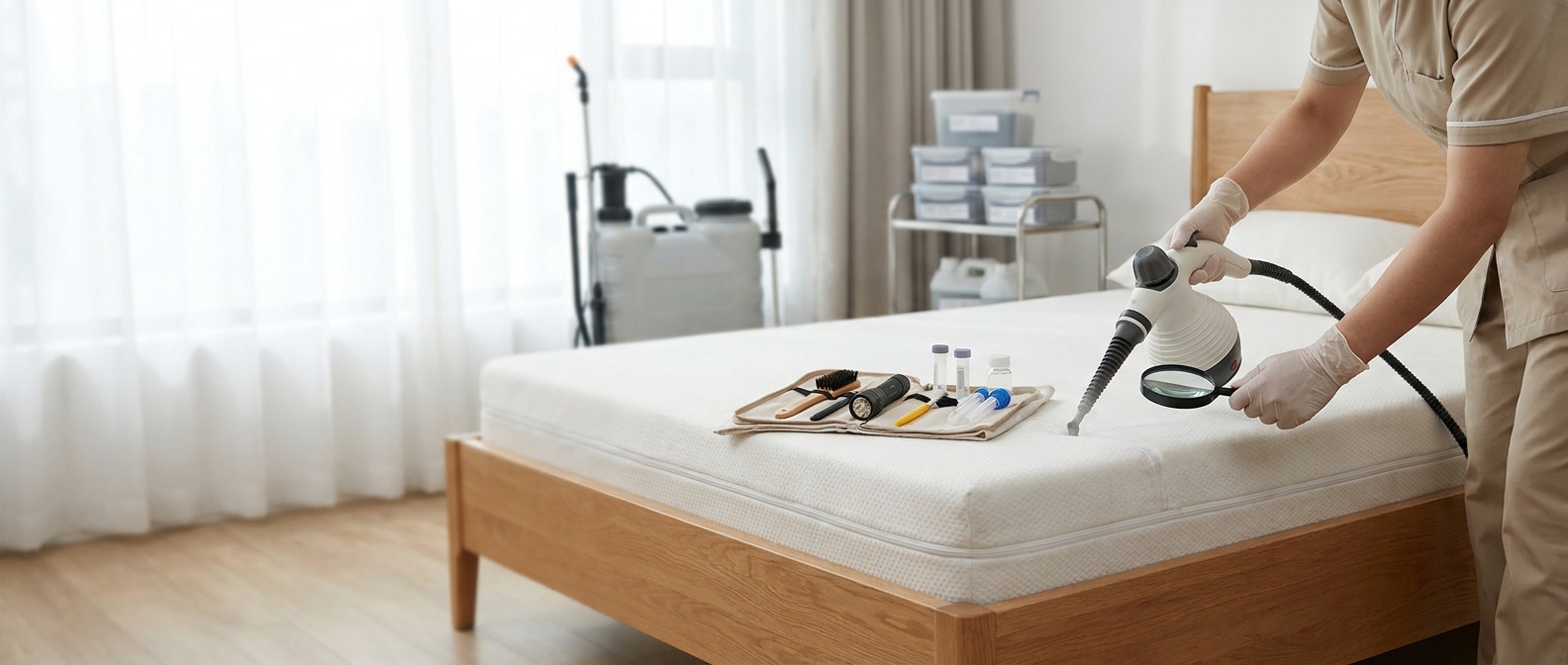
Why Your Rentokil Treatment Failed and What to Do
Contents
You paid a hefty bill, a technician came by, and you were promised that everything would be taken care of. And three weeks later, the bites are back. If you’re reading this, it’s probably because your Rentokil bed bug treatment was ineffective—and you’re not alone. I see this kind of situation every week in Brussels.
Things to remember
-
This article deconstructs the industrial approach taken by large corporations to explain the technical and organizational causes of treatment failures
-
He positions local expertise and meticulous craftsmanship as the only viable alternative to pest resistance
-
The technical causes behind the failure of an industrial process
-
Why Local Proximity Trumps Standardized Protocols
The problem isn’t necessarily the product or the technician themselves. It’s the whole system. Large companies operate on an industrial scale, with standardized protocols applied uniformly everywhere—regardless of the type of residence, the extent of the infestation, or the pest’s behavior. And bed bugs, for their part, really don’t like one-size-fits-all solutions.
In this article, I’m going to explain why your bed bugs keep coming back after treatment, what’s wrong with the mass chemical approach, and—most importantly—how to get rid of them for good. Without selling you a load of hot air.
The technical causes behind the failure of an industrial process
Let's start with the heart of the matter: the insecticide resistance. Modern bed bugs are not the same as those from the 1950s. Over generations, they have developed an impressive tolerance to pyrethroids, the family of molecules found in the vast majority of products sprayed by traditional exterminators. Studies have shown that some populations can survive doses up to 1,000 times higher than those that used to kill them. In other words, you can spray as much as you want—some colonies just shrug it off.
That is precisely where the’chemical extermination Industrial-scale treatment has its limitations. The technician arrives, applies the product to the «usual» areas, and leaves. But bed bugs hide in places that are out of sight: behind baseboards, in cracks in the bed frame, under wallpaper, and inside electrical outlets. If the product doesn’t come into direct contact with the insect—and if the insect is resistant to it—the effect is virtually nil. You kill the few exposed bugs, but you miss the eggs (which aren’t affected by most insecticides), and two weeks later, the population is back in full force.
When I read a Rentokil bed bug review that describes a failure, the scenario is almost always the same. A quick visit. A single treatment where multiple treatments would be needed. No thorough inspection to assess the true extent of the infestation. And preparing the home for the treatment is left entirely up to the customer, without a clear explanation. The result is predictable.
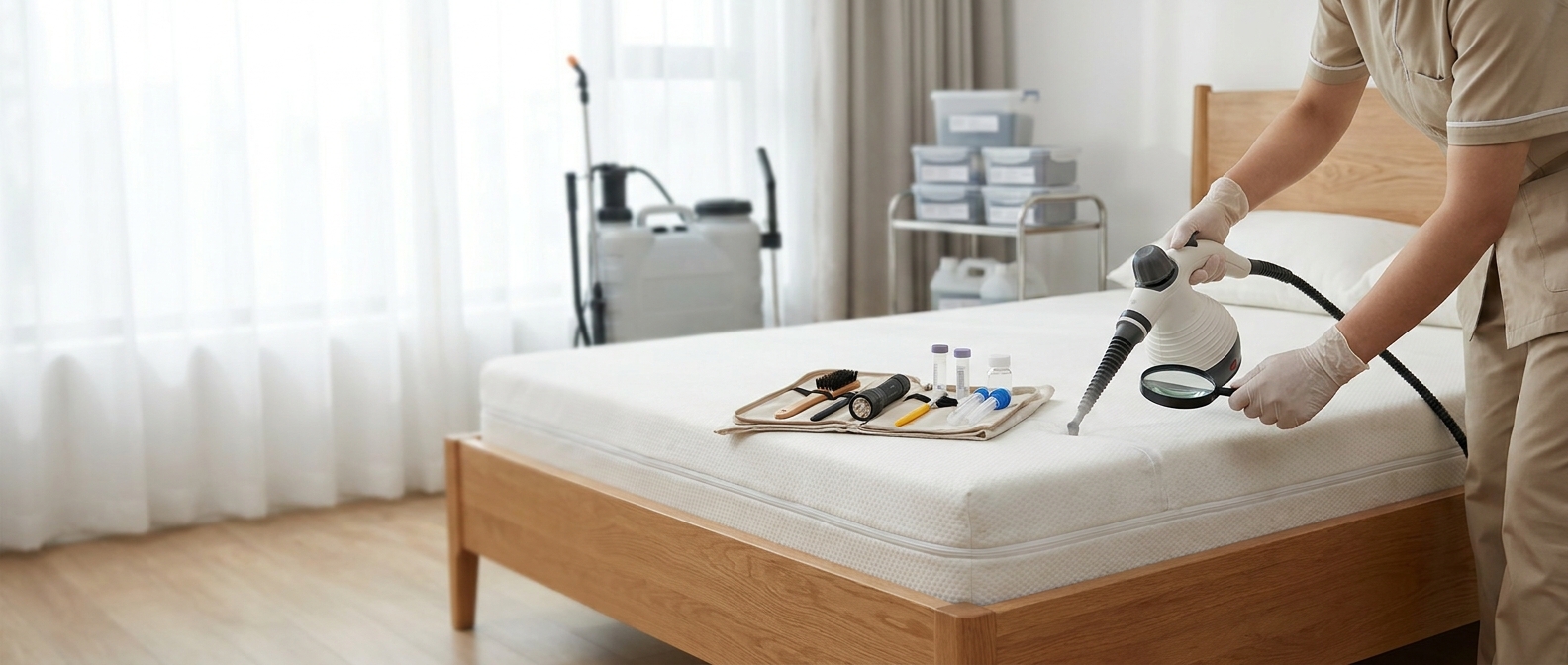
There’s also an organizational factor that’s all too often overlooked. A technician working for a large company sometimes has to handle five, six, or even seven service calls in a single day. He has a quota, a tight schedule, and a strict time limit per address. How are you supposed to methodically search every nook and cranny of an apartment when the pressure is on to finish in forty minutes? Bed bug treatment requires patience and thoroughness. Not speed. That’s why so many people end up with a treatment they paid for that doesn’t work—and the unpleasant feeling of having thrown their money down the drain.
Why Local Proximity Trumps Standardized Protocols
Imagine two approaches to the same infestation. On the one hand, a rigid national protocol—the same in Brussels as in Antwerp or Charleroi. On the other hand, a local bed bug expert who knows the different types of housing in Brussels—the old buildings in the city center, the row houses where infestations spread from one wall to the next. Guess which one really suits your situation?
The difference lies primarily in the method. The debate thermal treatment vs. chemical treatment is central here. The heat treatment for bed bugs involves raising the temperature of a room to between 50 and 60°C for several hours. At this heat, everything dies: adults, larvae, and especially eggs, which insecticides almost always leave behind. The heat penetrates everywhere—into mattresses, behind furniture, and into the tiniest cracks. There is no way to resist it. A bed bug cannot develop a tolerance to heat treatment. It’s a physical process, not a chemical one.
Chemical treatments still have their place—keep that in mind. But they serve as a complementary measure, acting as a preventive barrier in high-traffic areas, not as a standalone solution. It’s this smart combination, tailored to each specific situation, that makes all the difference. A large corporation will rarely sell you thermal treatment because it takes longer, is more demanding, and is less «scalable» on an industrial scale. We, on the other hand, choose the method that works for your home—period.
And then there's follow-up. A persistent infestation It’s never resolved in a single visit. You have to come back, check things over, and make adjustments. When you work with a local tradesperson, you have a direct point of contact who’s easy to reach and who remembers your case. Not a call center where you have to explain your situation to a new agent every time. That personal connection makes all the difference over the long haul.
Working with a exterminator in Brussels Being self-employed also means taking responsibility. My name is attached to every job I do. If it doesn’t go well, word gets around the neighborhood fast. I defend that local reputation on every job. A large, anonymous network can afford to have a few dissatisfied customers lost in the crowd. I can’t. And believe me, it radically changes the way I work.
Step-by-Step Guide to Permanently Eliminating Bed Bugs
Let's start with some good news: yes, it is entirely possible to get rid of bed bugs for good. As long as you follow a rigorous method. Here's how get rid of bed bugs in four solid steps.
-
The comprehensive inspection. Before treating anything, you need to know where they are. Inspect the bed, the box spring, the baseboards, the furniture, the picture frames, and sometimes even the electrical outlets. This mapping process determines the entire strategy. Skipping this step means treating blindly.
-
The preparation protocol. This is the step that clients overlook the most, and it’s often the reason for failure. You must wash all laundry at a minimum of 60°C, vacuum every surface and dispose of the vacuum bag immediately, clear the areas to be treated, and declutter. A poorly prepared home can undermine even the best treatment. We’ll guide you through this process step by step, with clear instructions.
-
Combination therapy. Apply a thermal shock to active nests to destroy everything, including eggs, followed by targeted application of a residual product in areas where they travel. We adjust the dosage and methods based on the actual extent of the infestation, not on a standard model.
-
Follow-up audit. We come back two to three weeks later to make sure there’s no activity left. If anything remains, we repeat the treatment. It’s this final check that turns a temporary treatment into sustainable solution.
One question comes up often: What’s the most effective product for killing bed bugs? The truth is, there’s no such thing as a miracle spray available on the market. Heat remains the most effective weapon, precisely because it bypasses any chemical resistance. Be wary of solutions sold as “magic cures” at big-box stores—they often just drive the bed bugs elsewhere without killing them.
If you have ever had a bed bug that returns after treatment, don't make the same mistake by looking for the cheapest option. Look for the most thorough one. Before incurring any more expenses, ask for a Bed Bug Treatment Quote A detailed quote that specifies the method, the number of passes, and the follow-up services included. A reliable quote protects you much better than a vague promise.
Conclusion
If your Rentokil bed bug treatment proved ineffective, it’s not inevitable, and it’s not your fault. It’s a sign that an industrial-scale approach is ill-suited to a pest that requires precision, heat, and follow-up. Insecticide resistance is real, but it has a weakness: it can’t withstand the right method.
In Brussels, we treat every infestation as a unique case—because it is. A thorough inspection, a combination of treatments, and personalized support from start to finish. If you’re tired of bites and empty promises, contact us for an honest assessment and a clear quote. We’ll get rid of the problem for good—this time.
Frequently asked questions
Why wasn't my Rentokil bed bug treatment effective?
This failure is often due to the industrial approach taken by large corporations: standardized chemical protocols used against bed bugs that have become highly resistant to insecticides. Furthermore, the lack of time allotted to technicians prevents them from thoroughly inspecting all hiding places and treating the eggs.
What should you do if bed bugs return after chemical treatment?
If the infestation persists, you should stop using chemical treatments and switch to a mechanical or thermal method (such as heat or dry steam). Bed bugs cannot develop resistance to heat, which allows you to destroy both adults and eggs in a single treatment.
What is the most effective treatment for permanently eliminating bed bugs in Brussels?
A combined treatment—using thermal shock (heat) to eliminate insects and eggs, along with a targeted application of residual chemicals in high-traffic areas—remains the most sustainable solution. Hiring an independent local exterminator ensures a customized and thorough follow-up, which is essential to the success of the treatment protocol.
Why don't conventional insecticides kill bed bug eggs?
The vast majority of mass-market chemical products have no effect on the protective shell of the eggs. This is why chemical treatment alone often fails, as the eggs hatch two weeks later and the infestation starts all over again.

 French
  English
  Dutch
Dutch