

Bed Bugs in Hospitals and Clinics in Brussels
Contents
-
Hospital Outbreak vs. Emergency Protocols: The Case of Erasme and Saint-Pierre University Hospital
-
Thermal vs. Chemical Treatment in the Medical Field: Selection Criteria for Clinics
-
Prevention Recommendations and Key Steps Before a Pest Control Treatment
It’s hard to imagine a bed bug in an operating room. And yet. These little creatures couldn’t care less about a facility’s level of sterility: what interests them is warmth and blood, not compliance with ISO standards. A hospital, with its constant flow of patients, visitors, luggage, and stretchers, is an ideal playground for Cimex lectularius.
In Brussels, the subject is often still considered taboo. No one likes to associate their healthcare facility with an infestation. But hospital hygiene officials know this: the problem exists, it affects even the largest centers, and silence only makes the situation worse. What sets a well-managed facility apart from another is not the total absence of bed bugs (which is illusory), but the speed and thoroughness of the response.
Things to remember
-
We go beyond mere media reports to analyze the actual emergency protocols at major medical centers such as Erasme and Saint-Pierre University Hospital
-
The firm focuses on providing reassurance through technical expertise and the personal touch of a local Brussels-based entrepreneur
-
The Case of Erasme and Saint-Pierre University Hospital
-
Compare the different options before deciding.
In this article, I’m going to go beyond mere media reports. We’re going to talk about actual protocols, concrete technical choices, and prevention. Because as a pest control technician who works daily in Brussels’ medical community, I see what works and what doesn’t.
Hospital Outbreak vs. Emergency Protocols: The Case of Erasme and Saint-Pierre University Hospital
A patient arrives at the emergency room. He’s coming from home, where a bedbug infestation had been quietly lurking in his mattress. He sets his bag down on the observation bed, stays for a few hours, and then goes up to a room. Within 48 hours, a bed bug can have spread to two or three other rooms. That’s how it starts in a hospital, and that’s why the issue of bed bugs in hospitals and clinics in Brussels is by no means a minor one.
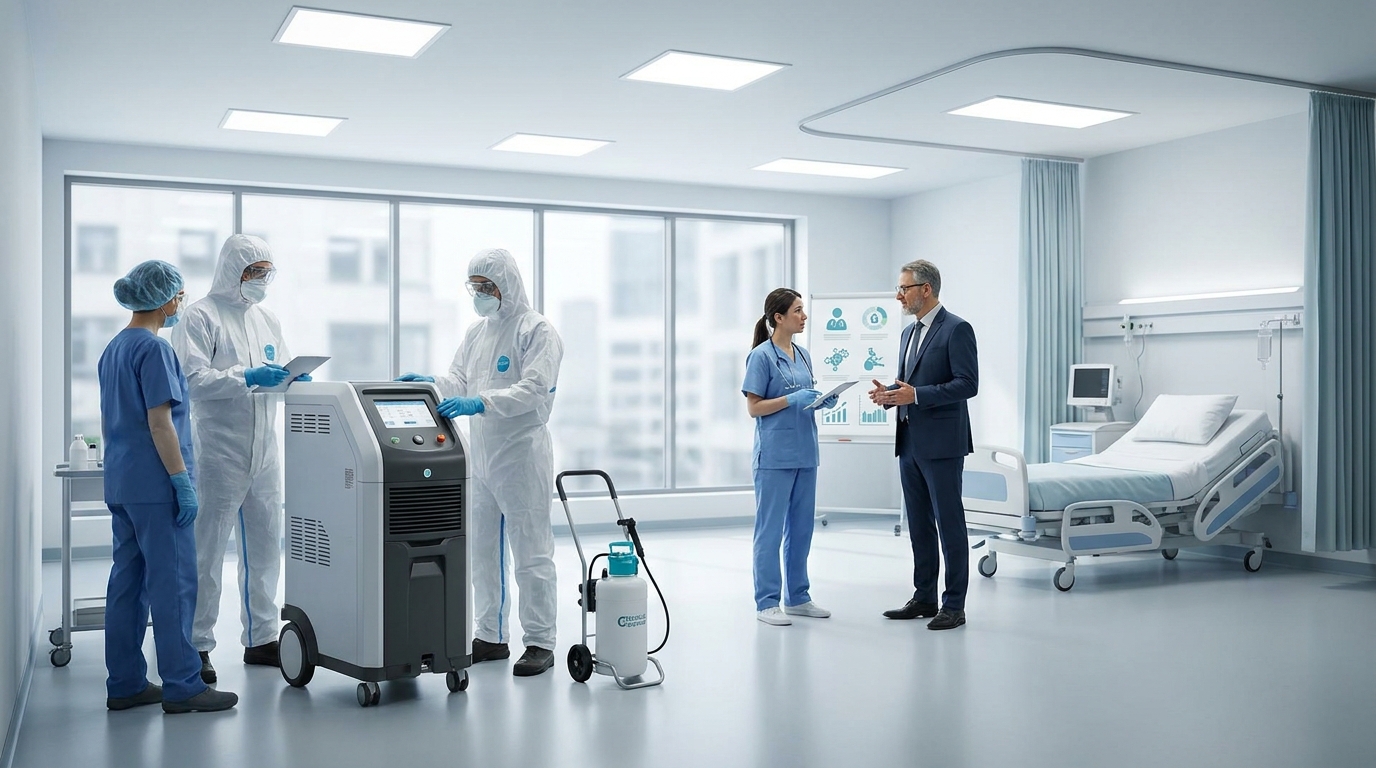
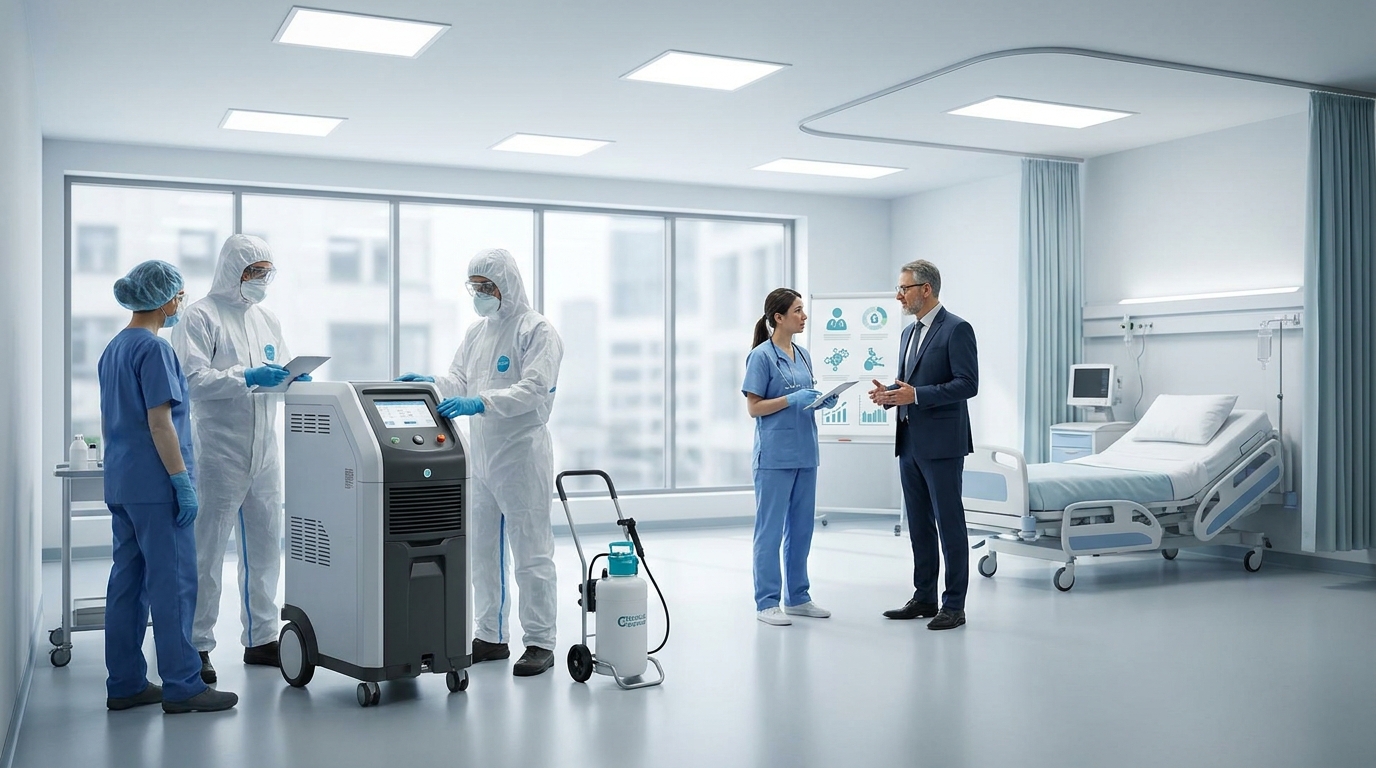
Brussels’ major medical centers have understood this for a long time. At Saint-Pierre University Hospital, the discovery of a bed bug does not result in a quick, discreet spray in a corner. It triggers a full-scale hospital emergency protocol: isolation of the affected room, inspection of adjacent rooms, patient traceability, and intervention by a specialized service provider within 24 to 48 hours. The room is taken out of service for the duration of the treatment. This comes at a high cost in terms of tied-up beds, but it is infinitely less expensive than a widespread infestation affecting an entire floor.
As far as Erasme is concerned, pest control relies heavily on early detection. An outbreak spotted early can be handled in a single room. An outbreak spotted late means three weeks of hassle and a damaged reputation. That’s why the canine detection at the hospital is gaining ground. A trained sniffer dog can detect an emerging infestation with a level of reliability that far exceeds that of human visual inspection, even in hard-to-reach areas such as hospital bed headboards or visitor chairs.
How do you actually get rid of bed bugs in a hospital? The answer can be summed up in three words: speed, method, and confidentiality. A good clinical health protocol includes a hygiene coordinator trained to recognize the signs (black spots, molted skins, rows of bites on patients), a clear alert procedure, and a contract with a Brussels bed bug exterminator capable of responding urgently without disrupting the continuity of care. Facilities that improvise when an outbreak occurs are always the ones that pay the heaviest price.
Thermal vs. Chemical Treatment in the Medical Field: Selection Criteria for Clinics
That’s the real technical debate. In a typical home, you have a choice. In a clinic, the constraints change everything. We’re talking about vulnerable patients, sensitive equipment, medications, electronic devices, and Brussels hospital hygiene standards that leave no room for carelessness.
Heat treatment for bed bugs has a huge advantage in medical settings: zero residue. The room is heated to 55–60 °C for several hours; the heat kills bed bugs at all life stages, including eggs, and there is absolutely nothing left to breathe in or touch afterward. For a patient room, a recovery room, or a geriatric unit, this is often the best choice. There’s no delay in reoccupancy due to fumes, and no risk of chemical exposure for people who are already weakened. The downside? Heat is unforgiving to sensitive equipment. IV bags, monitors, sensors, and certain medical devices cannot withstand these temperatures. The room must therefore be cleared or protected, which requires coordination.
Chemical disinfection in hospitals, on the other hand, remains useful in areas where heat treatment is not possible: utility ducts, suspended ceilings, and rooms filled with electronic equipment. The insecticides used in medical settings are selected for their safety profile, but they require a waiting period before the area can be reoccupied and strict ventilation. The underlying problem is resistance: more and more bed bug populations are withstanding conventional chemical treatments without batting an eye. This means we end up having to treat the area two or three times, which keeps the room off-limits for much longer than a single heat treatment would.
What are my criteria for choosing a treatment method at the clinic? Heat treatment is the priority for patients’ living areas, with targeted chemical treatment used to address hard-to-reach corners. Above all, pest control in medical settings should always be a comprehensive approach: canine detection beforehand, thermal treatment at the source of the infestation, residual treatment in high-risk areas, followed by a follow-up inspection two weeks later. Be wary of any one-time treatment that claims to solve everything at once. In hospitals more than anywhere else, it’s the rigor of follow-up that makes the difference between a problem that’s solved and one that comes back.
Prevention Recommendations and Key Steps Before a Pest Control Treatment
Are there bed bugs in Belgium? Yes, and clearly more and more of them. Brussels, as an international hub with its institutions, travelers, and high population density, is among the European cities most at risk. Belgium is on par with other major cities affected by this problem. So it’s better to take precautions before it happens rather than after.
Bed bug prevention in healthcare settings in Brussels relies first and foremost on surveillance. This includes using bed bug-proof covers on medical mattresses, regularly inspecting high-risk areas, and raising awareness among healthcare staff. A nursing assistant who knows how to recognize a suspicious sign can save precious days. Full-coverage mattress covers are not just a gimmick: they prevent bed bugs from establishing themselves deep within the mattress, the hardest place to treat.
When a procedure becomes necessary, how the hospital room is prepared before treatment can make or break the outcome. Here are the key steps I always recommend:
-
Remove the bedding and wash it at a minimum temperature of 60 °C, or tumble dry it on a high heat setting
-
Transfer the patient to a clean room, making sure that their personal belongings do not carry the problem with them
-
Clear the nightstands and move any heat-sensitive medical devices away
-
Never move infested furniture to other rooms before treatment, as this may spread the infestation.
-
Specify the exact locations where punctures or marks were observed, in order to target the response
People always underestimate this preparation phase. A poorly prepared room means that heat treatment loses its effectiveness or that chemicals fail to reach hidden hot spots. The service provider arrives, wastes an hour reorganizing everything, and the results suffer as a result.
My final piece of advice to all directors and hygiene managers: build a relationship with a local bed bug expert before you need one. A Brussels-based service provider who knows your buildings, your healthcare requirements, and your deadlines can respond within a few hours. A service provider from far away, called in at the last minute, will cause you to lose the time that makes all the difference. In this line of work, proximity isn’t just a sales pitch—it’s a key to success.
Conclusion
Bed bugs in Brussels clinics are not inevitable, but they cannot be solved by denial. The facilities that fare best are those that plan ahead: early detection, a well-established emergency protocol, the right choice between heat and chemical treatments, and, above all, a responsive local partner. It’s the combination of all these factors that protects your patients and your reputation.
Are you the head of a healthcare facility in Brussels and want to ensure your protocols are secure or respond to an outbreak? Contact us. We know the field, we understand the challenges of the healthcare sector, and we respond quickly, discreetly, and with the professionalism that your patients’ health demands.
Frequently asked questions
Is it common to find bed bugs in hospitals and clinics in Brussels?
Yes. As a densely populated international hub, Brussels is particularly vulnerable to the spread of Cimex lectularius. Hospitals and clinics, due to the constant flow of patients, visitors, and luggage, are ideal targets. The presence of bed bugs has nothing to do with a facility’s sterility or hygiene: they are attracted to human body heat and blood. This problem affects Brussels’ largest healthcare centers.
What is the emergency protocol at Brussels hospitals such as Erasme or the Saint-Pierre University Hospital?
Major hospitals implement strict health protocols as soon as a case is reported:
Immediately isolate the affected room and take it out of service.
Inspection of adjacent rooms to map the outbreak.
Patient tracking to prevent the problem from being shifted to other departments.
Bed bug extermination service in Brussels within 24 to 48 hours at most.
Why is canine detection recommended in medical settings?
Canine detection in hospitals is the most reliable and fastest method for identifying a budding infestation. A trained sniffer dog detects live bed bugs and eggs with surgical precision in places where the human eye fails (medical headboards, visitor chairs, utility ducts). This approach allows for swift action, enables treatment to be targeted to a single room, and prevents the need to close entire floors.
In-Office Thermal or Chemical Treatment: How to Choose?
The choice depends on the layout of the area and the patients' frailty:
Heat treatment (55–60 °C): Ideal for patient rooms and care units (geriatrics, recovery). It is 100% eco-friendly, with no chemical residues or toxic fumes, allowing for extremely rapid reoccupation. However, heat-sensitive medical equipment must be protected.
Chemical pest control: Reserved for inaccessible areas or those filled with electronic equipment (utility ducts, drop ceilings). It requires strict re-entry time limits and is sometimes ineffective due to bed bugs’ resistance to conventional insecticides.
How should you prepare a hospital room before the pest control technician arrives?
Thorough preparation is essential for successful pest control. The key steps are:
Wash bedding and textiles at a minimum temperature of 60 °C (or tumble dry on a high heat setting).
Transfer the patient safely, ensuring that their personal belongings are not infested.
Clear the furniture (nightstands) and move or protect sensitive medical devices.
It is strictly prohibited to move furniture to other rooms before treatment to prevent bed bugs from spreading.
Why Choose a Local Pest Control Expert in Brussels?
Pest control in medical settings cannot be delayed. Working with a local Brussels pest control company ensures an emergency response within a few hours, thorough knowledge of the region’s building layouts, and rigorous follow-up (essential by day 14). This is the only way to ensure the continuity of care and protect your clinic’s reputation.

 French
  English
  Dutch
Dutch