

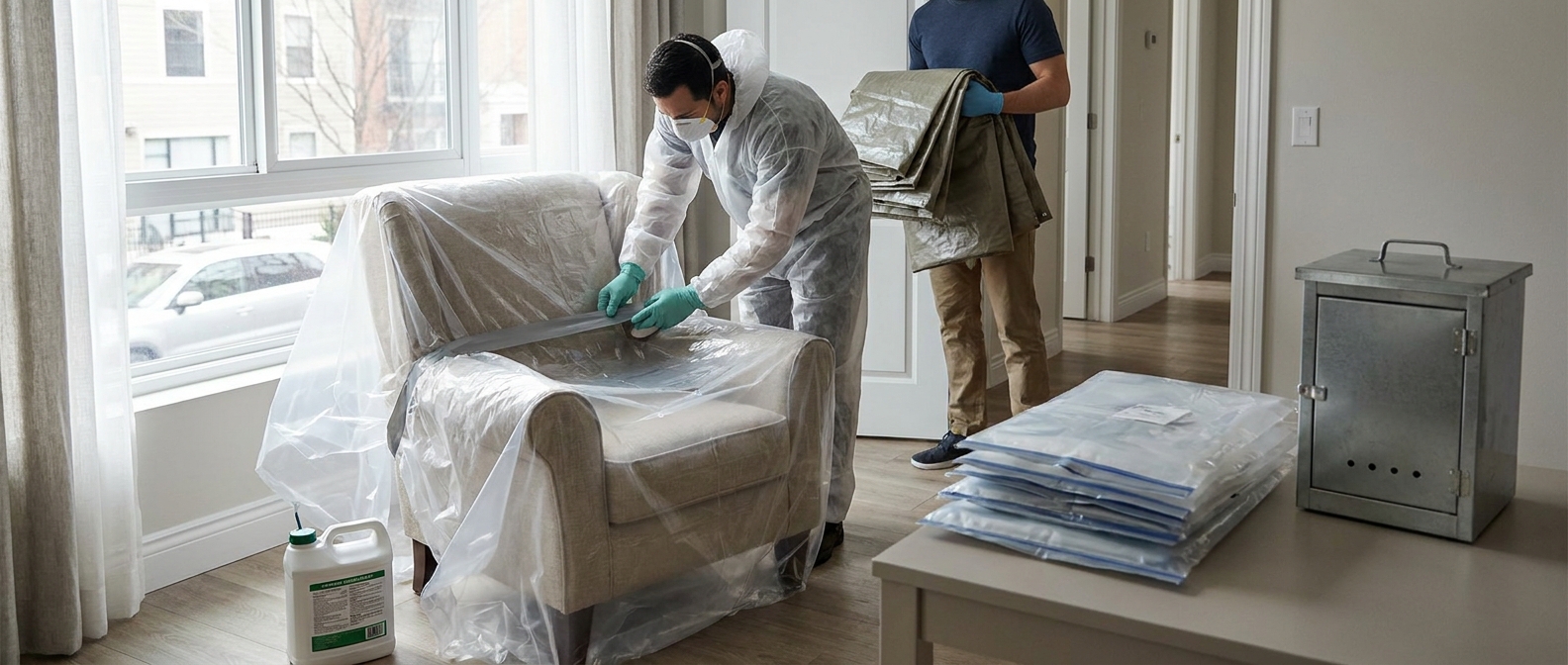
What is the procedure for removing infested furniture?
Contents
-
Understanding the Basics of the Protocol for Removing Contaminated Furniture
-
Step-by-Step Guide to Removing Your Furniture Without Spreading the Infestation
-
Incineration or Recycling: The Golden Rules for Disposing of Bulky Items
You have a bedbug infestation and you want to toss your mattress in the dumpster. Stop. That’s exactly how you turn a problem in one bedroom into a nightmare for the entire building. In Brussels, we see this scenario play out every week: a tenant drags their couch out onto the sidewalk, the bed bugs spread through the stairwell, and three apartments down, a new family ends up getting bitten.
Things to remember
-
We are repurposing traditional fire safety research to address an urgent public health need: the removal of furniture infested with bed bugs
-
The article provides local expertise on Brussels by clarifying the crucial exception regarding direct burning, which exempts this practice from the requirement for systematic airtight packaging
-
Understanding the Basics of the Protocol for Removing Contaminated Furniture
-
Step-by-Step Guide to Removing Your Furniture Without Spreading the Infestation
The protocol for disposing of infested furniture isn’t just administrative red tape. It’s a matter of basic health sense. An infested piece of furniture carries hundreds of eggs and insects that are just waiting to colonize a new area as soon as the door is opened.
And there’s one exception that few people know about: in some cases, if the furniture is sent directly to incineration, you can skip the step of sealing it in packaging. We’ll go over everything in detail. Follow along.
Understanding the Basics of the Protocol for Removing Contaminated Furniture
An adult bed bug lays between 200 and 500 eggs over the course of its lifetime. Do the math: a single infested mattress can harbor an entire colony, hiding in the seams, the joints of the box spring, and every crease in the fabric. That’s why the Furniture Evacuation Protocol It exists. It's not meant to make people's lives harder; it's to keep your problems from becoming your neighbor's.
The basic principle can be summed up in one sentence: a piece of furniture infested with pests must never leave your home without being treated or quarantined. Period. The Bed Bugs in Brussels They spread mainly this way—through furniture that’s moved without care. An armchair dragged down the hall, a box spring left in the entryway for a few minutes—and bugs fall off along the way. They wait quietly for their next host.
Many people think that a furniture infestation You might think you’ve solved the problem by tossing the item into the first dumpster you come across. Big mistake. First, because it’s often illegal to leave contaminated furniture on public property. Second, because someone will pick it up—people always pick up abandoned couches—and the cycle starts all over again somewhere else.
It’s also important to distinguish between items that can be treated and those that should be discarded. Not everything belongs in the dumpster. A high-quality solid-wood piece of furniture can often be salvaged through heat or chemical treatment, whereas a low-end mattress goes straight to the scrap heap. Pest control in Brussels begins with this sorting process: assessing each item before deciding its fate.
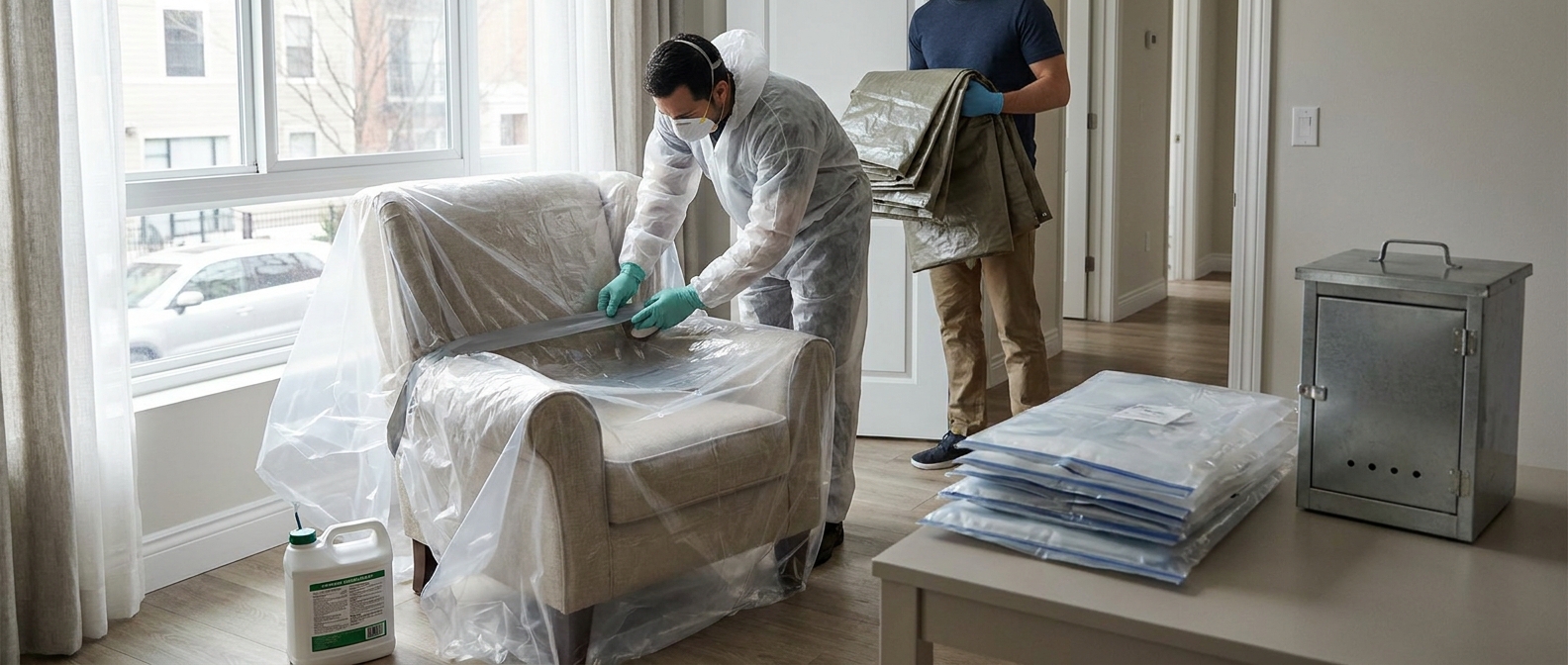
A proper evacuation procedure rests on three pillars. Identify the items that are actually affected (sometimes there are fewer than you might think). Isolate or treat them before moving them. Document the evacuation route so that nothing is left lying around in the common areas. This is a far cry from standard fire safety guidelines, but the spirit remains the same: get out quickly, get out clean, without endangering others. Except that here, the enemy isn’t visible to the naked eye—and that’s precisely the problem.
Step-by-Step Guide to Removing Your Furniture Without Spreading the Infestation
I’m often asked what the key steps are for a successful evacuation. Here’s the method we use in the field, which has been tested in hundreds of operations in Brussels.
Step 1: Marking the furniture. Before touching anything, identify and mark each contaminated part. A large piece of red tape, a cross drawn with a marker—it doesn't matter what method you use, as long as it's visible. This furniture marking This prevents two problems: someone picking up the item off the street, and it being mistaken for healthy furniture during transport. Write «INFESTED, DO NOT PICK UP» on it. It may seem silly, but it can save the day.
Step 2: On-site quarantine. Don't wait until you're in the hallway to start packing. Wrap the furniture in its own room, right where it is. Every jolt causes thumbtacks to fall out, so keep movements in the open to a minimum. This is the heart of a safe evacuation : Neutralize before moving.
Step 3: Define the output circuit. Choose the shortest route from the room to the truck. The fewer common areas you pass through, the less likely you are to spread of pests. Avoid using the elevator if possible, or clean it right after you use it. Let your neighbors know that you’ll be bringing furniture down—that way, they won’t be in the hallway at the same time.
Step 4: Transporting Bulky Items. A closed vehicle—never an open trailer where the insects scatter at the first turn. The bulky item pickup Contaminated items must be taken directly to the disposal site, without stopping at a relative’s home or a garage along the way. Every stop is an opportunity for contamination.
Step 5: Decontamination after discharge. Once the furniture has been removed, vacuum the path it took thoroughly, empty the vacuum cleaner bag immediately into a sealed bag, and wash your clothes at 60°C. Bed bugs can also hitch a ride on you.
Order is absolutely crucial. We test, we quarantine, we trace contacts, we transport, and we decontaminate. Skip a step, and you run the risk of having to start the whole process over in a few weeks. I’ve seen people make the same mistake three times because they skipped the on-site containment step. Being patient at this stage saves you months.
Incineration or Recycling: The Golden Rules for Disposing of Bulky Items
There are two possible courses of action for an infested piece of furniture, and the choice makes all the difference. Either you wrap it up to neutralize it, or you destroy it by burning it. That’s where the exception—which many people are unaware of—comes into play.
Let's start with the general rule. In most cases, you need a airtight packaging completely secured before going out. This refers to a thick plastic sheet or a protective cover a special bag, sealed with wide adhesive tape, without a single hole. The idea is to trap the bedbugs and their eggs so that none of them escape during transport. A torn bag is useless, so we double up the layer at the corners, where the plastic tears most easily.
Now for the Brussels exception—the one that makes life easier. If the furniture is moved directly to incineration, without any intermediate storage or handling, systematic airtight packaging is no longer essential. Why? Because fire solves the problem at the source. When you go to burn furniture with thumbtacks In the hours that follow, any insects that might escape during an extremely short, controlled transport do not have time to colonize anything. Thermal destruction kills everything: adults, larvae, and eggs.
Please note that this exception applies only under strict conditions: direct transport to the incinerator, in a closed vehicle, with no stops along the way. You cannot decide to burn your mattress in the yard this weekend and leave it on the balcony in the meantime. In Brussels, the’waste incineration goes through accredited programs, and that’s where you should turn. A professional in the Pest Control in Brussels is familiar with these routes and organizes the evacuation in accordance with established procedures.
My advice? When in doubt, wrap it anyway. Sealing it airtight costs just a few euros worth of plastic wrap and takes five minutes. It’s insurance against the health safety for your entire building. Direct incineration is practical when the processing facility is ready to receive the furniture immediately, but as soon as there’s a delay, storage, or an intermediary involved, we revert to the sealed bag. The logic is simple: either contain it, or destroy it immediately. Never anything in between.
Conclusion
Throwing out an infested piece of furniture without thinking is like giving your bed bugs to the whole neighborhood. You now know the protocol: label it, contain it, map out the route, transport it in a closed vehicle, and decontaminate the area afterward. And there’s that famous exception for direct burning, which exempts you from packaging the item when destruction follows immediately.
But let's be honest: managing a removal of infested furniture Doing it alone is stressful and easy to mess up. Just one poorly sealed cover, and you have to start all over again. At Punaisesdelitbruxelles, we know every corner of the city, every incineration facility, and every pitfall to avoid. We’ll guide you from diagnosis to final removal—cleanly, without spreading anything to your neighbors. Have a concern or suspect an infestation? Call us before you put any furniture out on the sidewalk. That’s where we make a difference.
Frequently asked questions
How do you dispose of a piece of furniture infested with bed bugs?
Wrap the piece of furniture directly in the infested room, mark it as contaminated, and remove it via the shortest route. The goal is to prevent bed bugs from spreading to common areas.
Should you wrap up a bedbug-infested mattress before throwing it away?
Yes, it is recommended that you seal the item tightly before transporting it. Use a sturdy cover or thick plastic wrap that is properly sealed.
Can you throw a piece of furniture infested with bed bugs out on the street?
No, infested furniture should not be left on the street without taking precautions. It could spread bed bugs or be taken by someone else.
Do you have to throw out all your furniture if you have bed bugs?
No. Many pieces of furniture can be saved and treated. Disposal is mainly necessary when a piece of furniture is heavily infested, difficult to treat, or already scheduled for replacement.
Is throwing the furniture away enough to get rid of bed bugs?
No. Bed bugs can hide in baseboards, cracks, fabrics, or other furniture. Therefore, their removal must be accompanied by appropriate treatment of the home.

 French
  English
  Dutch
Dutch