

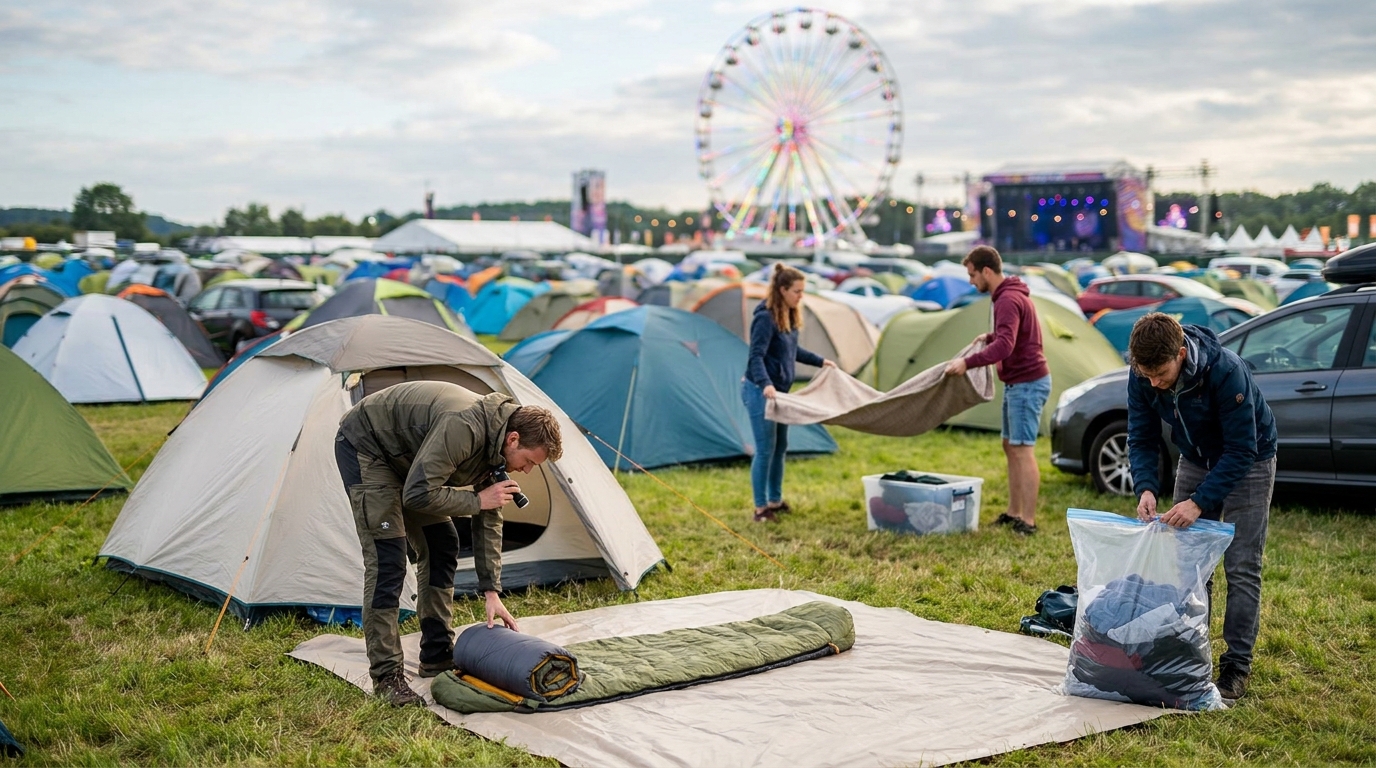
Bed Bugs at Music Festivals: A Complete Guide for Campers
Contents
-
Belgian Festivals and Bed Bugs: Understanding the Real Risks When Camping
-
On-Site Prevention: How to Protect Your Tent and Sleeping Bag
You’re packing your bag for Dour or Tomorrowland, triple-checking that you’ve got your boots, sunscreen, and ticket. But are you thinking about bed bugs? Probably not. And yet, it’s exactly under these conditions—thousands of people sleeping side by side, rented tents, and bags piled up—that these little critters find their paradise.
Things to remember
-
In the absence of specific information, we’re combining local expertise in pest control with the realities of major festivals (Tomorrowland, Dour)
-
The goal is to turn a latent fear into an actionable prevention strategy for Belgian festivalgoers
-
Understanding the Real Risks of Camping
-
How to Protect Your Tent and Sleeping Bag
Let’s be clear: the risk exists, but it’s by no means inevitable. Bed bugs at festivals aren’t handled with panic—they’re handled with a methodical approach. And that’s exactly what we do every day at Punaisesdelitbruxelles: identify, prevent, treat.
In this guide, I’ll give you practical advice. You’ll learn where the real danger lies, how to protect your tent and sleeping bag while you’re out there, and—most importantly—how to get home without bringing any stowaways with you. Because the worst-case scenario isn’t just a lousy night in a tent. It’s discovering an infestation in your bedroom three weeks later.
Belgian Festivals and Bed Bugs: Understanding the Real Risks When Camping
Are there bed bugs in Belgium? Yes, and more and more of them. The problem has exploded in recent years—all across Europe, in fact. Brussels, Antwerp, Liège: we’re responding to calls everywhere, and the number of requests keeps rising. Why are there so many bed bugs right now? Several factors are at play: growing resistance to insecticides, the boom in travel and the secondhand market, and a simple lack of awareness that allows infestations to take hold before people take action.
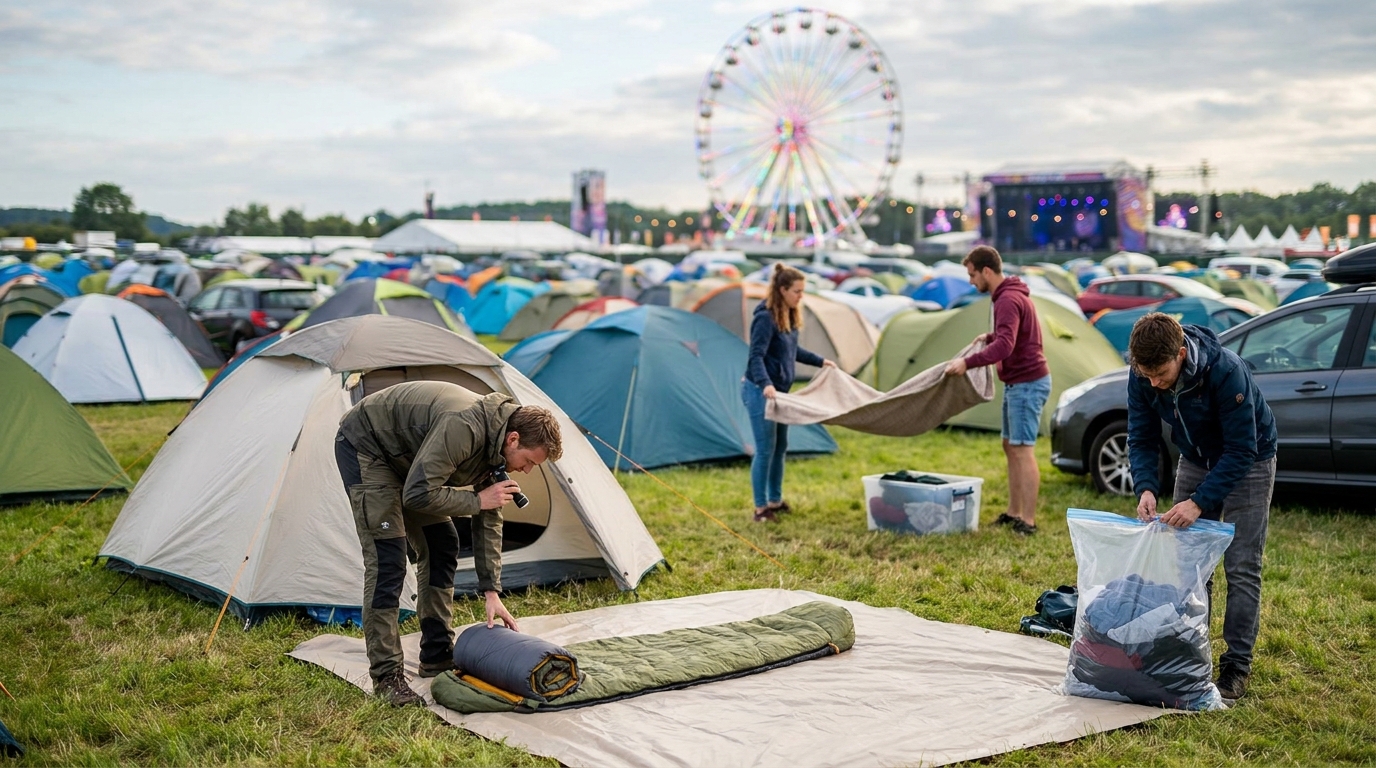
Now, let’s talk about festivals. A festival like Tomorrowland draws more than 400,000 people over the weekend. Dour attracts about 250,000 festivalgoers. Rock Werchter also draws massive crowds every year. Put that many people in cramped campsites, add in rented tents that have already been used dozens of times, and you’ve got the perfect conditions for a festival infestation.
Let’s be honest about the numbers: there are no official statistics on bed bugs at Tomorrowland or at the Dour campsites specifically. No one keeps track of this. But the lack of data doesn’t mean there’s no risk. Bed bugs don’t fly or jump. They travel by clinging to belongings: bags, clothes, sleeping bags. A festival is the perfect mix of all these items coming from every corner of the country and beyond.
The real entry point is shared accommodations. A pre-pitched tent that you rent on site may have previously housed someone returning from an infested hotel. A bed bug from a hotel can easily make its way all the way to a Belgian field. It’s less glamorous than the music, but that’s the logistical reality.
How can you tell if you have a problem? Bedbug bites often appear in a line or in small clusters, especially on areas of the body that are exposed while you sleep: arms, legs, and neck. They itch intensely, sometimes not until several days later. Other signs include small black spots (their droppings) on fabric, traces of blood, or a strange, sweet smell in a heavily infested tent. If you notice any of these during your festival, don’t just assume it’s mosquitoes. Take action right away.
On-Site Prevention: How to Protect Your Tent and Sleeping Bag
The best defense? Never give them a chance to get on board. Prevention while camping starts even before you pitch your tent. Rule number one: bring your own gear whenever possible. A personal tent—never a rented one—already reduces the risk by 80 %. If you absolutely have to rent one, inspect everything upon arrival: seams, dark corners, fabric folds. Bed bugs love to hide in areas where they won’t be disturbed.
Your sleeping bag deserves special attention—it’s your direct contact with the ground all night long. Store it in an airtight compression sack during the day; never leave it lying open on the grass or against the canvas of a neighboring tent. In the morning, shake it out and give it a quick once-over. Thirty seconds that could save you three weeks of trouble.
As for festival hygiene, I know—it’s not exactly a priority after two days of mud. But keep your clean stuff in sealed bags and your dirty stuff in separate bags—ideally, tightly tied trash bags. Bed bugs move from one bag to another as soon as the fabrics touch. By separating your items, you limit their range of movement.
And what about bed bug repellents? Let’s be clear: no miracle spray is going to make you invincible. Repellents made with essential oils (lavender, lemon eucalyptus) might deter them a little, but don’t rely on them as your only line of defense. What really works is a physical barrier and staying vigilant. A spray is a supplement, not a strategy.
A few simple habits that make all the difference:
-
Place your air mattress or sleeping pad on top of something; never sleep directly on a shared floor.
-
Avoid placing your backpack next to your neighbors' backpacks in common areas.
-
Keep a flashlight handy: a five-minute nighttime inspection often reveals what daylight hides.
-
If you're staying at a hotel or hostel before or after the festival, check the mattress and box spring before unpacking your bags.
The logic is always the same: the less your stuff comes into contact with other people’s, the fewer opportunities you give bedbugs to get in. At the festival, we share music, beer, and memories. Not bugs.
The Return Protocol: Don't Bring Bed Bugs Home
The most critical moment is when you get back. You’re exhausted; you just want to toss your bag in the hallway and sleep for 12 hours. Don’t do that. That’s exactly how an infestation starts at home. A few minutes of discipline when you get home are well worth the cost of pest control in Belgium.
Golden rule: Don’t bring anything into your room until everything has been checked. Unpack your bag outside, on the patio, in the garage, or in the bathroom (a cool surface that’s easy to inspect)—never on your bed. Luggage decontamination should be done away from sleeping areas.
When it comes to laundry, heat is your ultimate weapon. Bed bugs and their eggs die at temperatures above 60 °C. So: wash bed bug-infested laundry at a minimum of 60 °C, then tumble dry on a high heat setting for at least 30 minutes. The dryer is even more effective than washing alone—it’s the prolonged dry heat that does the job. What can’t you wash at 60 °C? Put it in the dryer anyway, or place it in a large, sealed plastic bag in the freezer at -18 °C for 72 hours.
Your sleeping bag, tent, and backpack: treat them all with heat as soon as possible. Carefully vacuum the nooks and crannies of your backpack, then immediately throw the vacuum bag outside, making sure it’s tightly sealed. Inspect the seams with a flashlight before putting everything away.
Over the next few weeks, stay alert. Bites that appear when you wake up, small spots on your sheets, unexplained itching—these are warning signs. The sooner you act, the easier it is to fix. A new infestation can be treated quickly. An infestation that’s been going on for two months is a whole different story.
How much does a bed bug expert cost? It depends on the area and the method (heat treatment, steam, chemicals), but generally ranges from 150 to several hundred euros, depending on the scope of the problem. That’s precisely why prevention is so inexpensive in comparison. And if you have even the slightest doubt after your festival, don’t try to be a hero: a bed bug expert in Brussels will provide a clear diagnosis and tell you right away whether you have a real problem or a false alarm. We’d much rather put your mind at ease in five minutes than have to treat your entire apartment a month later.
Conclusion
Bed bugs at a music festival aren’t a reason to stay home sulking while your friends are dancing at Dour or Werchter. It’s just a risk you need to manage wisely. Personal gear, keeping your belongings separate, staying vigilant while you’re there, and a solid plan for when you get back: with these steps, you’ll stack the odds in your favor.
Remember the basics: heat kills them, contact spreads them, and acting quickly makes all the difference. Enjoy your festival to the fullest, and when you get back, take those twenty minutes that make all the difference. And if you ever have any doubts, we’re here for you. At Punaisesdelitbruxelles, we know these pests better than anyone, and we respond quickly, right in your neighborhood. One message, one diagnosis, peace of mind.
Frequently asked questions
Is there a risk of bed bugs at festivals in Belgium (Dour, Tomorrowland)?
Yes, the risk is real due to the massive concentration of festivalgoers, the sharing of equipment, and the mixing of bags from all over the world. Festival campsites like Dour or Tomorrowland—especially those with rented or pre-assembled tents—are ideal breeding grounds for the spread of these parasites.
How can you avoid bringing bed bugs home after a festival?
The golden rule is to never empty your backpack directly onto your bed when you get back from the festival. Check your belongings outside or in the bathroom, then wash all your clothes and your sleeping bag at a minimum of 60 °C or put them in the dryer for 30 minutes.
Why Are Bed Bug Infestations on the Rise in Belgium?
The surge in cases in Brussels and Wallonia can be attributed to an increase in international travel, the growth of the secondhand market, and the insects’ increased resistance to conventional insecticides. Unlike garden bugs, bed bugs are strictly urban pests that spread through human mobility rather than climate conditions.
How can you tell if you've been bitten by bed bugs while camping?
Bed bug bites often appear as clusters or rows of red bumps on areas of the body that are exposed while sleeping (arms, legs, neck) and cause severe itching. You may also notice small black spots from their droppings or traces of blood on your tent or sleeping bag.

 French
  English
  Dutch
Dutch