

Natural Alternatives against Bed Bugs : Complete Guide
Contents
-
Anti-Bedbug Essential Oils: Which ones to choose and how to use them?
-
Diatomaceous Earth: A Natural Insecticide Effective Against Bedbugs
-
Comparison: Natural Alternatives vs. Chemical Bedbug Treatments
Are you constantly scratching yourself? Do you have itchy little red bites? Unfortunately, you could be facing a bedbug problem. These little nocturnal pests are a real nuisance, and getting rid of them can seem an insurmountable challenge. Fortunately, there are natural alternatives bed bugs that can help you enjoy a peaceful night's sleep without resorting to harsh chemicals. At Pest Patrol, we understand your concern to protect your family and pets. That's why we've put together this comprehensive guide to natural bedbug disinsectisation efficient.
This practical guide explores natural remedies bed bugs, We'll be taking a closer look at these environmentally-friendly and often gentler solutions for your home. We'll explain in detail the methods, ingredients and precautions to be taken when using these products. bed bugs natural solutions and maximize their effectiveness. You'll discover how to identify an infestation, which essential oils to use, the power of diatomaceous earth, and much more! Get ready to take back control of your space and say goodbye to bed bugs, naturally!
Identifying and Confirming a Bedbug Infestation : The signs
Before you embark on a natural bedbug treatment, It's crucial to confirm that you're dealing with a bedbug infestation. Confusing bedbug bites with those of other insects is a common mistake. Similarly, attributing an infestation to the wrong source can delay the eradication of the problem. Visit infestation detection is the key to a successful fight. So how do you recognize signs of bed bugs without making a mistake?
The first and often most obvious indicator is the presence of bites. Bedbug bites usually take the form of small red papules, often clustered or aligned, usually on areas of skin exposed during sleep (arms, legs, neck, back). L’identify bites It's important not to confuse bedbug bites with those of other insects such as mosquitoes or fleas. Bedbug bites tend to be intensely itchy, and can appear several days after the bite.
However, bites are not always enough to confirm an infestation. Some people don't react to bites, while others may have severe allergic reactions. It is therefore essential to look for other signs of bed bugs more concrete. Take a close look at your bedding, especially mattress seams, box springs, headboards and cracks in furniture. Look for small black or brown spots, which are in fact bedbug excrement. You may also find small translucent skins, remnants of their moults, or even bedbugs themselves. Adult bed bugs are small, oval-shaped insects, reddish-brown in color and about 4 to 5 mm long (the size of an apple seed).
Don't forget to also inspect areas adjacent to the bed, such as bedside tables, baseboards, picture frames and carpets. Bed bugs are experts at hiding in the most unexpected places. If you travel frequently, be especially vigilant on your return. Inspect your luggage and clothing to avoid accidentally introducing bedbugs into your home.
Things to remember
-
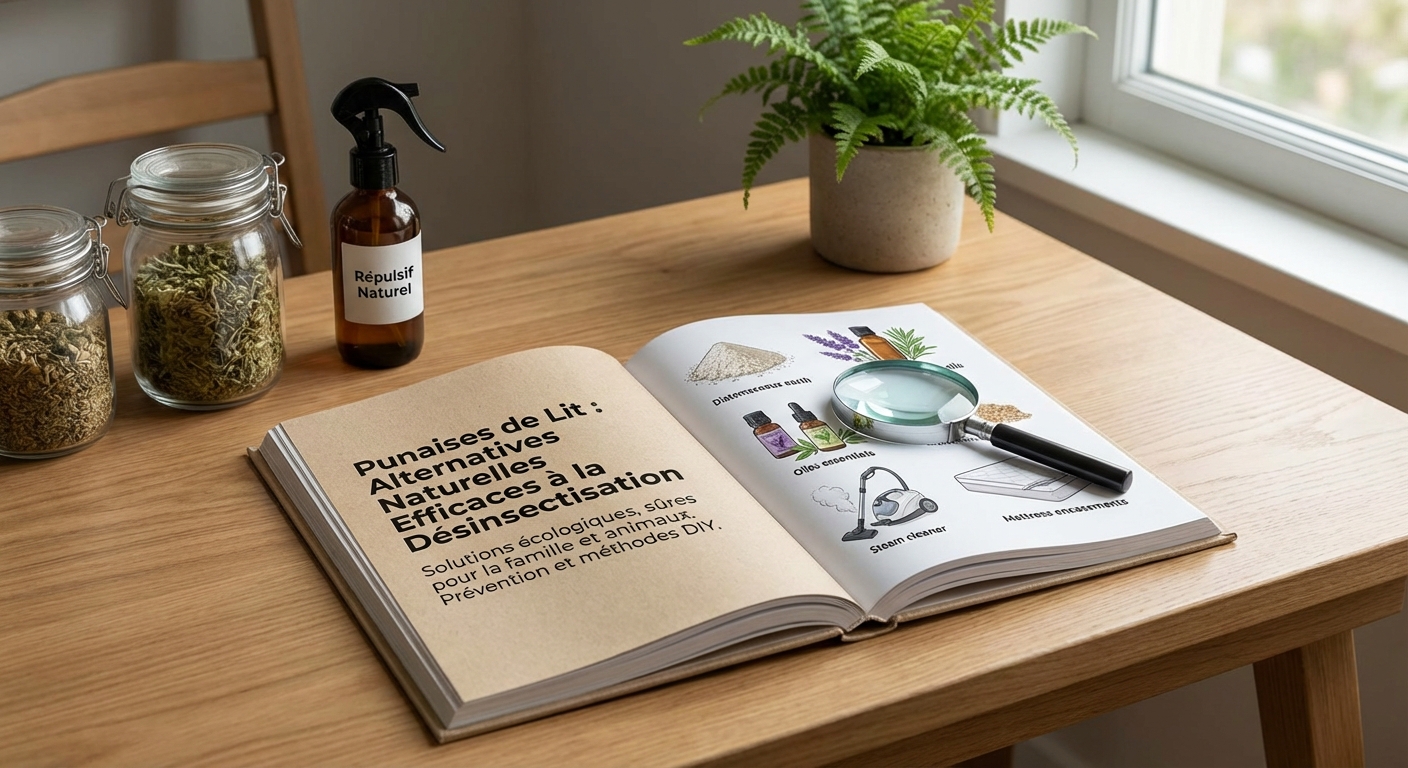
This practical guide explores natural alternatives to chemical bedbug extermination.
-
We detail environmentally friendly solutions that are safe for your family and pets, and evaluate their effectiveness compared to traditional treatments.
-
Emphasis on prevention and DIY methods
When in doubt, don't hesitate to call in a professional for an inspection. A pest control expert will be able to confirm the presence of bed bugs and advise you on the best options for their control. natural bedbug treatment or conventional.
Anti-Bedbug Essential Oils: Which ones to choose and how to use them?
Visit essential oils bed bugs are a natural alternative increasingly popular for pest control. They offer a gentle, environmentally-friendly approach, yet are effective if used correctly. But which are the best essential oils bed bugs and how to use them safely?
Several essential oils are renowned for their insecticidal and repellent properties against bedbugs. Among the most effective are :
-
LavenderEssential oil of lavender is known for its soothing properties, but it also has insect repellent properties. Its pleasant fragrance can help keep bedbugs out of your bedroom.
-
Tea treeEssential oil of’tea tree is a powerful antiseptic and antifungal, but is also effective against insects. Its strong odour is unpleasant for bedbugs.
-
EucalyptusEssential oil of’eucalyptus, lemon eucalyptus, in particular, has both insecticidal and repellent properties. Its fresh, stimulating fragrance can help purify the air and keep bedbugs at bay.
-
PeppermintPeppermint essential oil is an excellent repellent for many insects, including bedbugs. Its strong, refreshing scent effectively repels them.
-
ClovesClove essential oil contains eugenol, a powerful insecticidal compound. It can be used to target bedbugs directly.
Here are a few natural recipes with essential oils to combat bedbugs:
-
Repellent sprayMix 30 drops of lavender essential oil, 20 drops of tea tree essential oil and 100 ml of water in a spray bottle. Shake well and spray on bedding, furniture and infested areas.
-
Essential oil diffuserDiffuse a mixture of lavender, eucalyptus and peppermint essential oils in your bedroom at night to repel bedbugs.
-
Anti-bite massage oilDilute a few drops of lavender or tea tree essential oil in a vegetable oil (such as sweet almond oil) and apply to bites to relieve itching and promote healing.
Before using essential oils, it's important to take certain precautions. Always test the essential oil on a small area of skin to check for allergic reactions. Do not use essential oils on pregnant women, young children or people with respiratory problems. Always use high-quality, pure, natural essential oils.
Essential oils can be a natural alternative effective against bed bugs, but they are not always sufficient to eliminate a major infestation. In this case, it's best to combine their use with other natural methods, or to call in a professional.
Diatomaceous Earth: A Natural Insecticide Effective Against Bedbugs
Visit diatomaceous earth bed bugs is a natural insecticide increasingly popular in the fight against these parasites. Composed of the fossilized remains of microscopic algae, it acts mechanically rather than chemically, making it safe for humans and pets alike, provided the food grade is used. But how can diatomaceous earth and how to apply it correctly?
Visit diatomaceous earth is made up of tiny abrasive particles which, on contact with bedbugs, damage their protective exoskeleton. This leads to rapid dehydration and death of the insect. Its action is therefore purely physical, which considerably reduces the risk of resistance developing, unlike chemical insecticides.
For a application efficient diatomaceous earth against bed bugs, follow these steps :
-
PreparationVacuum infested areas thoroughly to remove dead bed bugs and their droppings. Wash your bedding at high temperature (at least 60°C) and tumble-dry.
-
ApplicationSprinkle a thin layer of diatomaceous earth in areas where bed bugs are likely to hide: mattress seams, box spring, cracks in furniture, skirting boards, etc. Use an applicator (such as a powder flask) for even distribution.
-
SecurityWear a mask and gloves during application to avoid inhaling the powder or irritating your skin. Keep children and pets away from the treated area during application.
-
CleaningLeave the diatomaceous earth for several days, even weeks, reapplying if necessary. Then vacuum up any powder residue.
It is essential to use diatomaceous earth food-grade diatomaceous earth. Industrial-grade diatomaceous earth may contain impurities hazardous to your health. Be sure to wear a protective mask during application to avoid irritating your respiratory tract.
Visit safety is of paramount importance when using the diatomaceous earth. Although it is considered a natural insecticide To be safe, it's important to observe the precautions for use. Avoid inhaling or ingesting the powder, and wash your hands after use. If you have pets, make sure they don't come into direct contact with the powder.
Visit diatomaceous earth is an excellent natural alternative to chemical insecticides for bedbug control. Its mechanical action and safety make it an invaluable ally in protecting your home and family.
Steam Cleaning: A Thermal Method for Eliminating Bedbugs
Visit steam cleaning bed bugs is an effective thermal method of eliminating these pests without the use of chemicals. The heat The intense heat of steam, when applied directly to bedbugs and their eggs, kills them instantly. It's a particularly good option for treating mattresses, upholstered furniture and other sensitive areas where the use of insecticides is inadvisable. But how to use steam cleaning for an efficient disposal bed bugs?
The principle of heat treatment is simple: steam, heated to a high temperature (generally between 120°C and 180°C), is projected onto infested surfaces. This heat intense penetrates every nook and cranny and kills bedbugs and their eggs by thermal shock. The steam cleaning is particularly effective for treating mattresses, box springs, headboards, carpets and upholstered furniture.
For a steam cleaning effective against bed bugs, follow these steps:
-
PreparationVacuum the areas to be treated thoroughly to remove dead bed bugs and their droppings. Wash your bedding at high temperature (at least 60°C) and tumble-dry.
-
ApplicationUse a steam cleaner with a nozzle adapted to the surfaces to be treated. Slowly pass the nozzle over infested areas, paying particular attention to seams, creases and cracks. The heat must penetrate deep to reach bedbugs and their eggs.
-
SecurityWear protective gloves and clothing to avoid burns. Never direct steam directly at your skin. Make sure the room is well-ventilated during operation. steam cleaning.
-
RepeatRepeat the steam cleaning several times, every few days, to eliminate all bed bugs and their eggs.
Visit steam cleaning is an effective method of eliminating bed bugs, but it does have a few drawbacks. Investing in a quality steam cleaner can be expensive. In addition, precautions must be taken to avoid burns and damage to delicate surfaces. It's also important to note that steam cleaning is not always enough to eliminate a major infestation. In such cases, it is preferable to combine this method with others. natural alternatives or call in a professional.
In short, the steam cleaning is an interesting thermal method for controlling bed bugs. Its effectiveness is based on the heat of steam, which kills insects and their eggs. If you follow the safety instructions, you can use this method with complete peace of mind. safety to protect your home and family.
DIY Bedbug Traps: Make Your Own Ecological Solutions
Visit DIY bed bug traps are a solution ecological to detect and reduce bedbug infestations. Making your own traps helps you control costs while adopting an environmentally-friendly approach. These traps, often homemade, are not a miracle solution for eradicating a massive infestation, but they can be a valuable tool for monitoring the presence of bed bugs and complementing other methods of control. natural bedbug treatment. So how do you make DIY bed bug traps efficient?
Here are a few examples of DIY bed bug traps simple and effective:
-
CO2 trapBed bugs are attracted to the carbon dioxide (CO2) we exhale as we sleep. You can make a CO2 trap by placing a plastic bottle cut in half upside down at the bottom. At the bottom, mix warm water, sugar and baker's yeast. The yeast will produce CO2, attracting bedbugs, which will become trapped in the bottle.
-
Glue trapPlace sheets of glue around the legs of your bed. Bed bugs will be trapped on the glue as they try to reach you during the night. This type of trap is particularly effective in detecting the presence of bedbugs.
-
Barrier trap: Place your bed feet in cups filled with mineral oil or bicarbonate of soda. Bed bugs will find it hard to climb or get through these barriers to reach you.
The manufacture of DIY bed bug traps is simple and requires only common materials. Here's how to make a CO2 trap:
-
Cut a plastic bottle in half.
-
Turn the upper part of the bottle upside down and insert it into the lower part, to form a funnel.
-
Tape the two parts together.
-
Mix warm water, sugar and baker's yeast in the bottom of the bottle.
-
Place the trap near your bed.
Visit DIY bed bug traps are a solution ecological to control these pests. They can detect the presence of bedbugs and reduce their population. However, they are not a miracle solution and need to be combined with other methods of control. natural bedbug treatment for a disposal complete.
For maximum efficiency, place the DIY bed bug traps in strategic places: near the foot of your bed, under furniture, along baseboards, etc. Check traps regularly and replace them if necessary. Remember, prevention is the key to avoiding bedbug infestations.
Preventing Bedbug Infestations : Natural Tips and Tricks
Visit prevention of bed bugs is the key to avoiding these unpleasant and costly infestations. Adopting’maintenance and be vigilant when you're on the move. travel can save you a lot of trouble. Fortunately, there are many natural tips to minimize the risks and protect your home. At Pest Patrol, we believe that a little prevention is better than a lot of treatment. So how do you implement natural barriers effective against bedbugs?
Here are a few tips and natural tips to prevent bedbug infestations:
-
Inspection regular bedding inspection: Carefully examine your mattress, box spring and headboard for signs of bed bugs (black spots, dead skin, live bugs). Do it regularly, especially after a trip.
-
Maintenance Home care: Vacuum your bedroom regularly, paying particular attention to rugs, carpets and skirting boards. Wash your bedding at high temperature (at least 60°C) and tumble-dry.
-
Be vigilant when travel Inspect your hotel room carefully on arrival, especially the mattress and headboard. Place your suitcases on a rack and avoid placing them directly on the bed or floor. When you return, wash your clothes at high temperature or tumble-dry for at least 30 minutes.
-
Use of natural barriers Surround the feet of your bed with diatomaceous earth or strips of glue. These natural barriers will prevent bed bugs from climbing onto your bed.
-
Repellent essential oils: Diffuse lavender, eucalyptus or peppermint essential oils in your bedroom. These essential oils have repellent properties against bedbugs.
L’inspection A regular inspection of your bedroom is essential for the early detection of bed bugs. Be particularly vigilant if you've recently traveled or bought second-hand furniture. Don't hesitate to call in a professional for a thorough inspection in case of doubt.
L’maintenance Regular vacuuming of your home is also crucial to preventing bedbug infestations. Vacuum your bedroom regularly, focusing on areas where bed bugs are likely to hide. Wash your bedding at high temperature and tumble dry to kill bed bugs and their eggs.
Visit prevention of bed bugs is a profitable investment. By adopting these tips and natural tips, You can minimize the risk of infestation and protect your home and family. Remember, vigilance is the key to avoiding these unpleasant problems.
Comparison: Natural Alternatives vs. Chemical Bedbug Treatments
When it comes to getting rid of bed bugs, the choice between natural alternatives and chemical treatments can be tricky. Each option has its advantages and disadvantages in terms of’efficiency, of safety, of cost and environmental impact. Understanding the differences between these approaches is essential to making an informed decision and choosing the solution best suited to your situation. So, what's the best option for you? natural remedies bed bugs or chemical insecticides?
Visit natural alternatives, These methods, such as diatomaceous earth, essential oils and steam cleaning, offer a gentler, more environmentally-friendly approach. They are generally considered safer for humans and pets, as they do not contain harsh chemicals. However, their efficiency can be variable, depending on the severity of the infestation and the rigor of application. Visit natural alternatives may also require several applications and regular monitoring to achieve satisfactory results.
Visit chemical treatments, These are often faster and more effective at eliminating bed bugs, particularly in the case of heavy infestations. They are generally applied by pest control professionals and may involve the use of powerful insecticides. However, the chemical treatments present potential risks for the safety humans and pets, especially if products are used incorrectly. They can also have a negative impact on the environment and encourage the development of resistance in bedbugs.
In terms of cost, the natural alternatives are generally less expensive than chemical treatments. However, the cost total may vary according to the severity of the infestation, the number of applications required and the need for professional assistance.
Here is a comparison table summarizing the main differences between the natural alternatives and chemical treatments :
Characteristic Natural alternatives Chemical treatments Efficacy Variable, depends on severity of infestation Generally faster and more effective Safety Safer for humans and pets Potential safety risks Cost Generally less expensive Generally more expensive Environmental impact More environmentally friendly Potential negative environmental impact
The choice between natural alternatives and chemical treatments depends on yourPriorities. If you prefer safety and respect for the environment natural alternatives can be an interesting option. If you need a fast and efficient solution, the chemical treatments may be more appropriate. In some cases, a combined approach involving the natural alternatives and chemical treatments, can be the most effective solution.
Frequently asked questions
What is Natural Alternatives?
A natural alternative is a method that does not use chemicals and that respects your environment.
How to use Alternatives naturelles
Our step-by-step guide shows you how to use Natural Alternatives effectively.
What are the advantages of Alternatives naturelles?
The main advantage is that you can make your own remedies and try to get rid of the infestation yourself.
Conclusion
In short, fighting bed bugs may seem like an uphill battle, but with the right information and the right methods, it's entirely possible to get rid of them naturally. In this guide, we've natural alternatives bed bugs, From essential oils to diatomaceous earth, steam cleaning and DIY traps. Remember, prevention is key, and vigilance is your best weapon. If, despite all your efforts, the infestation persists, don't hesitate to call in a professional. At Pest Patrol, we're here to support and advise you. So, are you ready to take back control of your space and say goodbye to bed bugs? Contact us today for a free consultation and find out how we can help you get back to peaceful nights, naturally.

 French
  English
  Dutch
Dutch