

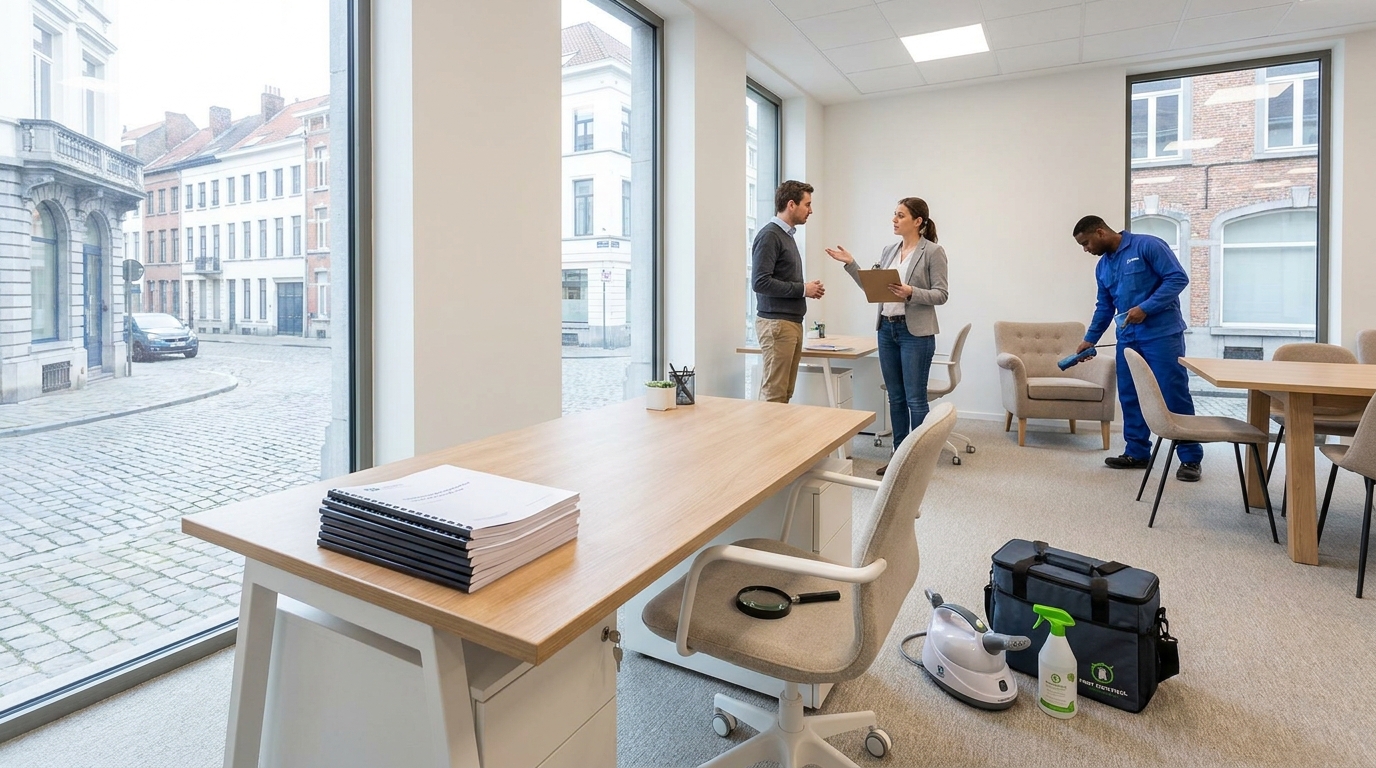
Bedbugs at work in Brussels: Employer's obligations
Contents
-
The legal framework in Belgium: Code of well-being and safety at work
-
Emergency procedure: What to do if an employee reports an infestation?
-
Sustainable eradication and prevention solutions for companies in Brussels
One employee scratches his arm in a meeting. Another finds a suspicious stain on the back of his office chair. The next day, it's panic: someone has found a live bedbug in the break room. And then, as an employer or space manager, the question hits you like a bolt from the blue: what am I legally obliged to do?
Things to remember
-
This article fills a crucial gap by adapting the issue to the Belgian legal framework (Code du bien-être au travail) specific to Brussels.
-
It offers a unique blend of legal advice for employers and logistical solutions for Brussels coworking spaces.
-
Workplace well-being and safety code
-
What to do if an employee reports an infestation?
The subject of bedbugs in the Brussels workplace is by no means anecdotal. With the density of shared offices, coworking spaces and the constant flow of traveling workers, workplace infestations are exploding. And contrary to popular belief, it's not just a domestic hygiene problem. It's a problem of employment law, civil liability and public health.
This article is aimed at company directors, HR managers and coworking managers in Brussels. Together, we'll take a look at the Belgian legal framework, the procedure to follow in the event of a report, and practical solutions to eradicate the problem without paralyzing your business.
The legal framework in Belgium: Code of well-being and safety at work
First thing to know: in Belgium, there's no specific law mentioning bedbugs by name. No «anti-cimex» decree, no dedicated royal decree. But that in no way means that employers are free to do nothing. Far from it.
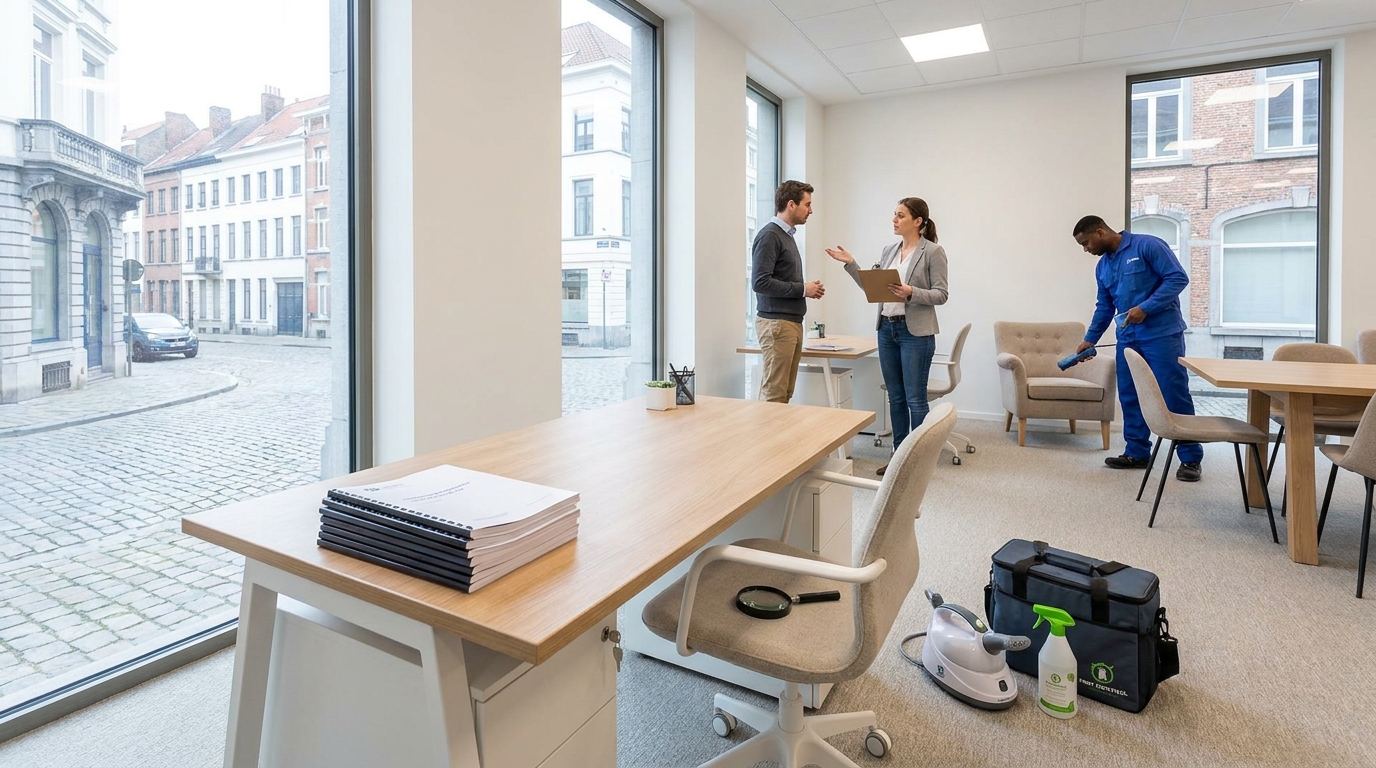
Visit Workplace well-being code is the reference text. It requires all employers to safety obligation and protection of workers' health. It's broad, it's all-encompassing, and that's exactly why it also covers pests. Article I.2-6 of the Code obliges employers to identify and assess all the risks to which their workers are exposed. All risks. Including biological and environmental risks on the premises.
When we talk about the employer's five major obligations in terms of well-being, we're talking about workplace safety, health protection, psychosocial load, ergonomics and occupational hygiene. A bedbug infestation affects at least three of these five pillars. Repeated bites affect physical health. The stress, anxiety and stigma associated with the infestation are psychosocial. And we're not even talking about the hygiene of the premises.
The employer must also rely on its prevention advisor and, in companies with more than 20 employees, on the Committee for Prevention and Protection at Work (CPPT). As soon as a risk is identified, a risk analysis must be updated and preventive measures taken. Ignoring a report of bedbugs means failing to meet this obligation. Point.
Responsibility goes even further for coworking managers in Brussels. As «master of the premises», you have a responsibility towards all occupants, even if they are not your direct employees. The Code lays down specific obligations for workplaces shared by several employers (Title 4 of Book III). Each party must cooperate to ensure safety, and the building manager is the coordinator.
A question I'm often asked: is it compulsory to report the presence of bedbugs? In Belgium, there is no legal obligation to declare the presence of bedbugs to the health authorities, as is the case for certain diseases. But beware: not notifying the authorities does not exempt you from informing workers and taking immediate action. The duty to inform employees is enshrined in the Workplace Wellness Code. If you withhold information and an employee develops severe allergic reactions or post-traumatic stress, you may be held civilly or even criminally liable.
Who is responsible for bedbugs in the office? The answer is unambiguous: the employer. Or the premises manager if the premises are shared. Even if the infestation was «brought in» by an employee returning from a trip, it's up to the company to take responsibility for disinfesting the business premises. The bill cannot be passed on to the employee.
Emergency procedure: What to do if an employee reports an infestation?
9.15am, Monday morning. Your HR assistant receives an e-mail: «I've found bedbugs on my workstation.» Your first instinct should be not to minimize the situation. Every hour counts when it comes to these bugs, because a female lays between 5 and 15 eggs a day.
Here's how to manage a reporting bed bugs on your premises:
-
Acknowledge receipt immediately. In writing. An e-mail, an acknowledgement of receipt on your internal tool, whatever. But keep a record of it. In the event of a subsequent dispute, the date of notification and your responsiveness will be scrutinized.
-
Isolate the affected area. There's no need to evacuate the whole building, but the reported room or workstation should be sealed off pending inspection. No bags or clothing should leave the area without precaution.
-
Contact a pest control professional sometime today. Not tomorrow, not next week. An expert has to come and confirm the infestation and assess its extent. In Brussels, several specialized companies offer 24 to 48-hour response times.
-
Inform staff. Total transparency. Tell us what you know, what you do, and give clear instructions (check your belongings, report any injections, etc.).
-
Contact your prevention consultant and, where appropriate, the occupational physician. They need to be in the loop to assess health risks.
The question of temporary teleworking arises immediately. And this is often the most pragmatic solution. If the infestation is confirmed in an open space or shared room, it makes sense to ask the teams concerned to work from home during the treatment. It's also a way of limiting propagation: fewer people in the premises, less risk of bedbugs traveling in bags and coats.
Is it possible to request a work stoppage due to bedbugs? In theory, a doctor can prescribe a work stoppage if the employee presents physical symptoms (allergic reactions, dermatitis) or psychological symptoms (anxiety, insomnia). This is not a stoppage «for bedbugs» per se, but a stoppage linked to the consequences for health. An employer who refuses to take action exposes himself to a multiplication of these stoppages, with the costs that this implies.
Let's talk about right of withdrawal in Belgium. The concept exists, but it works differently than in France. Under Belgian law, workers can refuse to perform their work if they feel their life or health is in serious and immediate danger, provided the employer has not taken the necessary measures. Article I.2-26 of the Workplace Wellness Code governs this situation. An employee who refuses to come to work in an office infested with bedbugs, when the employer has done nothing to resolve the problem, is within his or her rights. But if the employer has taken prompt action (inspection, treatment, proposed telecommuting), the employee cannot simply decide to stop coming.
For coworking spaces, the procedure is even more delicate. You potentially have dozens of corporate clients to notify. Communication must be rapid, factual and reassuring. Explain the measures taken, propose alternatives (change of workstation, temporary meeting room) and, above all, show that you are in control of the situation. A coworking firm that handles a crisis of this kind badly loses customers. A coworking that handles it well reinforces its credibility.
Sustainable eradication and prevention solutions for companies in Brussels
200 euros. That's about the cost of a canine inspection for a standard office building in Brussels. A sniffer dog detects bedbugs with a reliability rate of over 95%, where the human eye easily misses half that number. For a company, it's the best initial investment: you know exactly where the problem is before you spend a penny on treatment.
Visit bed bug treatment in Brussels in the workplace generally follows two approaches, often combined:
-
Heat treatment. We raise the room temperature to 55-60°C for several hours. Bedbugs, larvae and eggs do not survive. This is the most effective method for an office, as it leaves no chemical residue and enables the premises to be reoccupied quickly. The cost varies between 800 and 2,500 euros, depending on the surface, but in most cases it's a one-off treatment.
-
Targeted chemical treatment. Application of professional biocides to infested areas. Less expensive per unit, but it often takes two or three passes spaced 15 days apart to eliminate the eggs that hatch in the meantime. During this period, the premises can still be used, but under supervision.
Visit professional disinfestation of a coworking space in Brussels requires special logistics. You can't close down an entire floor for three weeks without affecting business. The solution is to work in zones: handle one set on Friday evening, another on Saturday, and so on. The good service providers in Brussels understand these constraints and adapt their schedules accordingly.
Beware of scams. The Brussels office pest control market attracts unscrupulous operators who promise miraculous results with a simple spray. Always check that the service provider has regional approval for the use of biocides, offers a written protocol and guarantees its intervention with post-treatment follow-up. A serious company will come back to check on you 3 to 4 weeks after treatment, at no extra cost.
Preventing infestation on your premises is what will save you from reliving the nightmare. Here are a few concrete measures that work:
-
Anti-fly covers for armchairs and sofas common spaces. They cost between 15 and 40 euros per cover, and keep insects out of the seams.
-
Quarterly preventive inspections. A sniffer dog should be used every three months in high-risk areas (checkrooms, rest rooms, areas with upholstered furniture). Some service providers offer annual contracts costing around 600 euros for a medium-sized office.
-
Raising staff awareness. Display the signs of an infestation in common areas: small black spots on fabrics, translucent shedding skins, stings in lines on the skin. The more your teams know what to look for, the faster you'll detect a problem.
-
Baggage protocol for frequent travelers. If your employees travel regularly, advise them never to put their suitcases on the office floor when they return home. A travel bag lying next to a chair is the classic contamination scenario.
For coworking managers, include these measures in your maintenance contract in the same way as cleaning or air conditioning. Preventing infestation of your premises is not a luxury: it's an operational obligation that protects your reputation and your revenues. A coworking space in Brussels with a clear pest prevention policy reassures its occupants and sets itself apart from the competition.
A final point that is often overlooked: document everything. Every inspection, every treatment, every report must be recorded in a register. In the event of an inspection by the FPS Employment or a complaint from a worker, this documentation proves that you have fulfilled your obligations as an employer with regard to bedbugs. Without a written record, your good faith will be difficult to demonstrate.
Conclusion
Bedbugs in the workplace in Brussels are not inevitable. It's an occupational hazard like any other, and one that needs to be managed methodically, responsively and transparently. The Code du bien-être au travail leaves you no choice: as an employer, you must protect your teams, period.
React quickly to the slightest report, call in qualified professionals, implement serious prevention measures and keep a record of every action taken. If you're faced with an infestation situation in your office or coworking space in Brussels, don't be left alone with the problem. Contact us: we know the terrain, we know reliable service providers, and we can support you every step of the way.
Frequently asked questions
What is an employer's legal obligation with regard to bedbugs in Brussels?
Under the French Workplace Wellness Code, employers have a legal obligation to guarantee the health and safety of their workers. When faced with a biological risk such as bedbugs, it is mandatory for employers to assess the situation, inform employees and take immediate eradication measures at their own expense.
Who pays for disinfestation of business premises?
Financial responsibility lies exclusively with the employer or the premises manager (in the case of a coworking space). Even if the infestation was introduced by an employee returning from a trip, the costs of detection and treatment cannot be passed on to him or her under any circumstances.
Can an employee exercise his right of withdrawal in the event of an office infestation?
Yes, according to article I.2-26 of the Workplace Wellness Code, an employee can refuse to come in if his or her health is in serious and immediate danger. However, this right only applies if the employer remains inactive; if the company quickly implements solutions (treatment, teleworking), the employee can no longer retract.
Is it compulsory to report the presence of bedbugs to the authorities?
No, there is no legal obligation to report this type of pest to the Belgian health authorities. On the other hand, employers have a strict duty to inform their staff and representatives (CPPT, prevention advisor) as soon as a case is confirmed.
Is teleworking compulsory if bedbugs are reported?
Telecommuting is not a strict legal obligation, but it is the most pragmatic preventive solution. Introducing remote working for the teams concerned helps to confine the affected area, facilitate expert intervention and prevent pests from spreading to employees' homes.

 French
  English
  Dutch
Dutch