

Bedbugs: what can you do to avoid them when you return from vacation?
Contents
-
Garbage bags vs. water-soluble bags: which quarantine strategy to choose?
-
Washing at 60°C vs. tumble drying: advantages and disadvantages of thermal cycles
-
Steam cleaners vs. repellent sprays: criteria for choosing to decontaminate your suitcases
You put your suitcases in the hallway, the kids run into the living room, the cat sniffs the bags. Stop. This is exactly when it all comes down to it. Because if a bed bug has crept into your luggage during your stay, it's only waiting for one thing: for you to open that suitcase in the bedroom and colonize your mattress in a matter of days. And believe me, in Brussels, we see this every year between the end of August and October. The peak of vacation returns is also the peak of infestations.
Things to remember
-
Adopt the ‘SAS Protocol’ right from the door: a rigorous quarantine method that compares domestic and professional techniques to transform your entrance into an impenetrable decontamination zone.
-
Which quarantine strategy should you choose?
-
Advantages and disadvantages of thermal cycles
-
Decontamination criteria for your suitcases
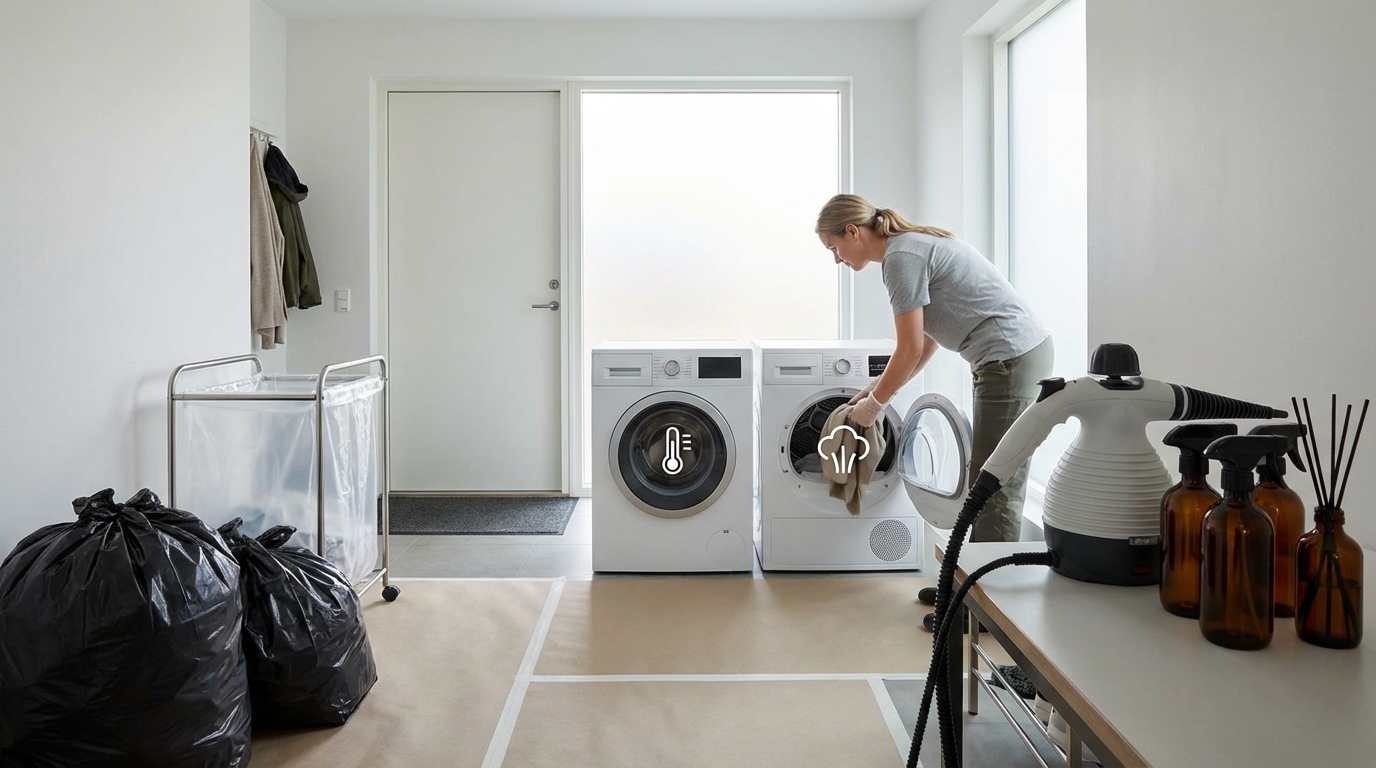
So what can you do when you return from vacation to avoid bed bugs? There's a simple protocol I call the «SAS Protocol»: Separate, Sanitize, Secure. The idea is to turn your hallway, garage or laundry room into a real decontamination zone. It's not complicated, and you don't need professional equipment for the first line of defense. But you do need to be rigorous. A single fertilized female that slips through the cracks means 200 to 500 eggs in just a few weeks.
In this article, I compare domestic techniques: which type of bag to use for quarantine, which thermal cycle to kill the bugs, which tool to use to decontaminate the suitcase itself. With clear-cut answers, not «it depends» on each line.
Garbage bags vs. water-soluble bags: which quarantine strategy to choose?
First step in the protocol when you return from a trip: don't take anything out of the luggage inside the house. Everything must be kept under lock and key. Luggage quarantine is the gesture that makes the difference between a peaceful return and three months of hardship.
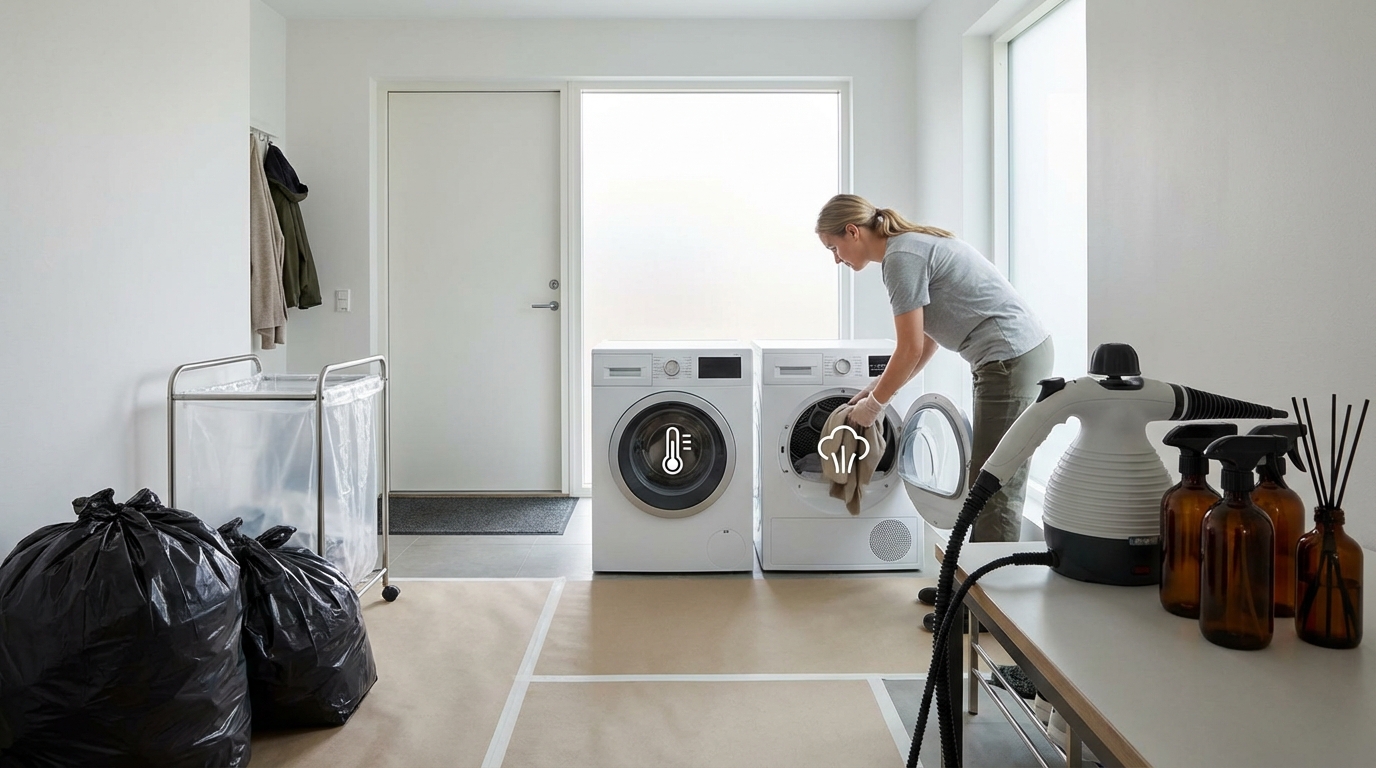
The most common technique, the one you see all over the forums, is the classic garbage bag. You empty your suitcase directly into a large 100-litre bag, tie it up tightly and run off to the washing machine. And it works. But there's a problem nobody mentions: the moment you open the bag in front of the machine. If an adult bedbug or nymph is on a piece of clothing, it can fall, crawl or hide in a tile joint. You've lost.
This is where the water-soluble bag comes into its own. These bags, originally used in hospitals for contaminated linen, dissolve on contact with hot water. Simply place your clothes in the bag, close it and throw the whole bag into the drum. No handling, no opening, zero risk of leakage. The bag melts during the cycle, the clothes are released and washed normally.
The hermetic garbage can liner does have one advantage: the price. We're talking about a few cents each, compared with 1 to 2 euros for a water-soluble bag. For a family of four returning home with three suitcases, that's a lot of money. And if you're methodical, if you open the bag directly above the drum without dropping anything, the result is almost identical.
My advice? Use water-soluble bags for the clothes worn during your stay (those most likely to be contaminated) and conventional garbage bags for the rest: clean clothes left in the suitcase, toiletries and shoes. It's a good compromise between safety and budget.
There are a few points to bear in mind if quarantine is to be truly effective:
-
Sort it out outside or in the garage, never in a bedroom or living room.
-
Each bag must be closed immediately after filling. No open bags lying around.
-
Non-washable items (books, electronics, souvenirs) go into a separate airtight bag, heading for the freezer if possible.
-
The suitcase itself stays outside. We'll deal with that later (more on that below).
An important detail: freezing certain fragile textiles is an alternative when washing is not an option. Silk, cashmere, leather: put them in an airtight bag and freeze at -18°C for at least 72 hours. Bedbugs and their eggs cannot survive at this temperature. It's slow, but reliable for delicate pieces.
In the end, the real question is not «which bag to buy» but «will I follow the protocol to the end». A well-used garbage bag is better than a water-soluble bag opened any old way. Rigor is 90% of the result.
Washing at 60°C vs. tumble drying: advantages and disadvantages of thermal cycles
30 minutes at 60°C. That's how long it takes to kill an adult bedbug, its nymphs and eggs in a washing machine. The temperature of the lethal bedbug is around 56°C, maintained for at least 20 minutes. The 60-degree wash cycle exceeds this threshold with a good safety margin. On paper, it's the ideal solution.
Except that not all your clothes can withstand 60°C. A cotton t-shirt, no problem. A linen shirt, a synthetic swimsuit, a viscose dress? You'll find them deformed, shrunken or discolored. And when you come back from vacation, half your suitcase contains exactly this type of lightweight clothing.
That's where the tumble dryer comes in. A 30-minute tumble-drying cycle in hot mode easily reaches 60-70°C at the heart of the fabric. The advantage? You can first wash your fragile garments at 30 or 40°C (to clean them without damaging them), then tumble-dry them for the lethal thermal effect. Two steps, but both do their job.
There's a common trap: the «delicate» tumble-dryer program. It often only heats to 40-50°C. Not good enough. Check the actual temperature of your appliance. If you're not sure, choose the cotton or intensive program. Better a slightly wrinkled garment than an infestation in the bedroom.
Here's how I recommend proceeding, in concrete terms:
-
Hard-wearing clothing (cotton, thick polyester, jeans, towels): direct wash at 60°C, normal cycle. This is the simplest and safest method.
-
Clothes that are fragile but can be tumble-dried wash at 30-40°C then tumble dry on a hot program for at least 30 minutes.
-
Very fragile clothing (silk, fine wool, leather): no hot washing or tumble-drying. Freeze at -18°C for 72 hours in an airtight bag.
A question I'm often asked: is cold washing enough if you add a bedbug repellent to the machine? No. Commercial liquid insecticides are not designed for use in washing machines. They lose their effectiveness when diluted in 50 liters of water, they can damage the machine's seals and, above all, they don't kill the eggs. Heat remains the only reliable treatment for textiles.
Another point often overlooked is footwear. You might not think about it, but bedbugs love the seams and dark corners of a pair of sneakers or sandals. If your shoes can be tumble-dried (check the label), do so. Otherwise, a trip to the freezer will do the trick. Just don't store them directly in the hall closet.
To avoid bedbugs when you return from a trip, the thermal rule is simple to remember: above 56°C or below -18°C, nothing survives. Anything in between is a gray zone where you're taking a risk. Don't play with half-measures.
Steam cleaners vs. repellent sprays: criteria for choosing to decontaminate your suitcases
Your clothes are processed, your bags discarded. But there's one big problem: the suitcase itself. Bugs hide in the seams, inside pockets, zippers and wheels. Inspecting the suitcase is a step many people skip because they think they've done the hard part. Not so. I've seen infestations start from a single nymph stashed in the lining of a piece of carry-on luggage.
There are two main options for decontamination: steam treatment or repellent spray. And frankly, the comparison is easy to make.
Steam cleaners are the ultimate weapon against bedbugs. Steam comes out at 100°C minimum (some models go up to 160°C at the point of contact). At this temperature, everything dies instantly: adults, nymphs and eggs. You pass the nozzle slowly over every seam, every nook and cranny, every pocket of the suitcase. Allow 15 to 20 minutes for a standard piece of luggage. The advantage is that the steam penetrates into the fibers and interstices, whereas a spray only stays on the surface.
Spray repellents, on the other hand, pose a number of problems. Firstly, most products sold in supermarkets are repellents, not contact insecticides. They repel bedbugs (in theory), but don't kill them. If a bedbug is already in your suitcase, the spray won't eliminate it: it will just try to escape, potentially into your home. Exactly the opposite of what you want.
Permethrin and deltamethrin sprays are lethal, it's true. But their effectiveness on eggs is virtually nil. A bedbug egg is protected by a shell that is resistant to most household insecticides. The result: you kill the adults, think you're safe, and two weeks later the eggs hatch. Back to square one.
What do bed bugs really hate? Intense heat. Not lavender, not essential oils, not ultrasound. Heat. That's why steam cleaners are so effective: they exploit their number-one weakness.
For a complete suitcase inspection, here's how I do it:
-
Place the open suitcase on a light surface (a white sheet on the floor, for example) to easily spot anything that falls out.
-
Visually inspect the inner and outer seams with a flashlight. Look for small black dots (droppings) or brownish marks.
-
Steam clean all surfaces, paying particular attention to folds, fastenings and castors.
-
Allow to dry completely before storing. Residual moisture can encourage mould growth.
If you don't have a steam cleaner, is it worth buying one? Yes, without hesitation. A decent device costs between 80 and 150 euros. When you consider that a professional treatment against a bedbug infestation in Brussels starts at 300 euros (and easily rises to 800 for an entire apartment), the investment quickly pays for itself. And you can use it to clean your mattresses, sofas and curtains all year round.
To keep bedbugs out of your home after a trip, the winning combination is: quarantine clothes in airtight bags, heat treatment in the wash or tumble-dryer, and steam decontamination of the suitcase. Three steps, in that order, without skipping a beat.
One last point about «natural» sprays based on essential oils (tea tree, clove, citronella). I'll be blunt: there are no serious studies demonstrating their effectiveness against bedbugs. They may have a slight, temporary repellent effect, but that's all. Don't rely on them to protect your home. If you want to sleep soundly after your vacation, rely on warmth, not odors.
Conclusion
Returning from vacation and bedbugs - it's a subject no one wants to broach when unpacking. Yet 20 minutes of rigor on arrival can save you weeks of stress and hundreds of euros in treatment costs. The SAS Protocol consists of three steps: isolate in bags, treat with heat and decontaminate with steam.
If, despite all these precautions, you notice any suspicious bites or marks on your sheets in the days following your return, don't wait. Contact us quickly. In Brussels, we intervene quickly, and the earlier an infestation is caught, the easier it is to eliminate. Better a call for nothing than a colony in your box spring.
Frequently asked questions
How to avoid bedbugs after a trip?
To avoid bedbugs, apply the SAS protocol as soon as you return home: isolate your linen in water-soluble or airtight bags as soon as you arrive, then heat-treat it (wash at 60°C or tumble dry for 30 minutes). Finally, decontaminate your suitcase with a steam cleaner to eliminate eggs and adults hidden in the seams.
What can I do to avoid bringing bedbugs home?
To avoid bringing back bedbugs, apply the SAS protocol right from the door: never empty your suitcases in a bedroom, but immediately isolate all your laundry in airtight or water-soluble bags. Eliminate insects and their eggs by washing your clothes at 60°C (or 30 minutes in a hot dryer) and treating your suitcase with a steam cleaner.
What do bedbugs hate?
Above all, bed bugs hate intense heat (above $56$°C) and extreme cold (below $-18$°C), which are the only truly lethal treatments for their eggs. Contrary to popular belief, they are not repelled by essential oils or ultrasound, which are ineffective in protecting your home.
How can I keep bedbugs out of my home?
To prevent intrusion, never empty your luggage in a living room: create a «decontamination SAS» at the entrance (garage or laundry room). Immediately isolate all contents in airtight bags for washing at 60°C, and treat the empty suitcase with a steam cleaner.

 French
  English
  Dutch
Dutch