

Bedbugs and linen: a guide to stopping their spread
Contents
-
Garbage bags vs. water-soluble bags: Which method for transporting laundry?
-
Washing at 60°C vs. tumble drying: Comparison of thermal disinfection cycles
-
Home treatment vs. professional dry cleaning: Criteria for choice and precautions
When bed bugs are discovered in the home, the first instinct is often to rip everything out: sheets, cushion covers, clothes from the laundry basket. Make a ball, run across the hall and into the washing machine. And that's exactly how you contaminate the whole apartment. Laundry isn't just a collateral victim of infestation. It's the number-one vector of textile propagation in a dwelling. Every time a sheet is moved carelessly, potentially dozens of eggs and nymphs are sown along the way.
Things to remember
-
This article treats linen not as a victim, but as the main vector of dispersion.
-
We compare containment methods (water-soluble bags vs. conventional bags) and thermal protocols to secure treatment without spreading the infestation.
-
How do you transport your laundry?
-
Comparison of thermal disinfection cycles
In Brussels, we regularly intervene in apartments where the infestation has migrated from a bedroom to the living room, and sometimes even to the common areas of the building. The cause? Almost always the same: poorly managed laundry treatment. Not through negligence, just a lack of information. So here's a practical guide to securing every step, from the moment you remove your sheets to the return of clean linen to the room.
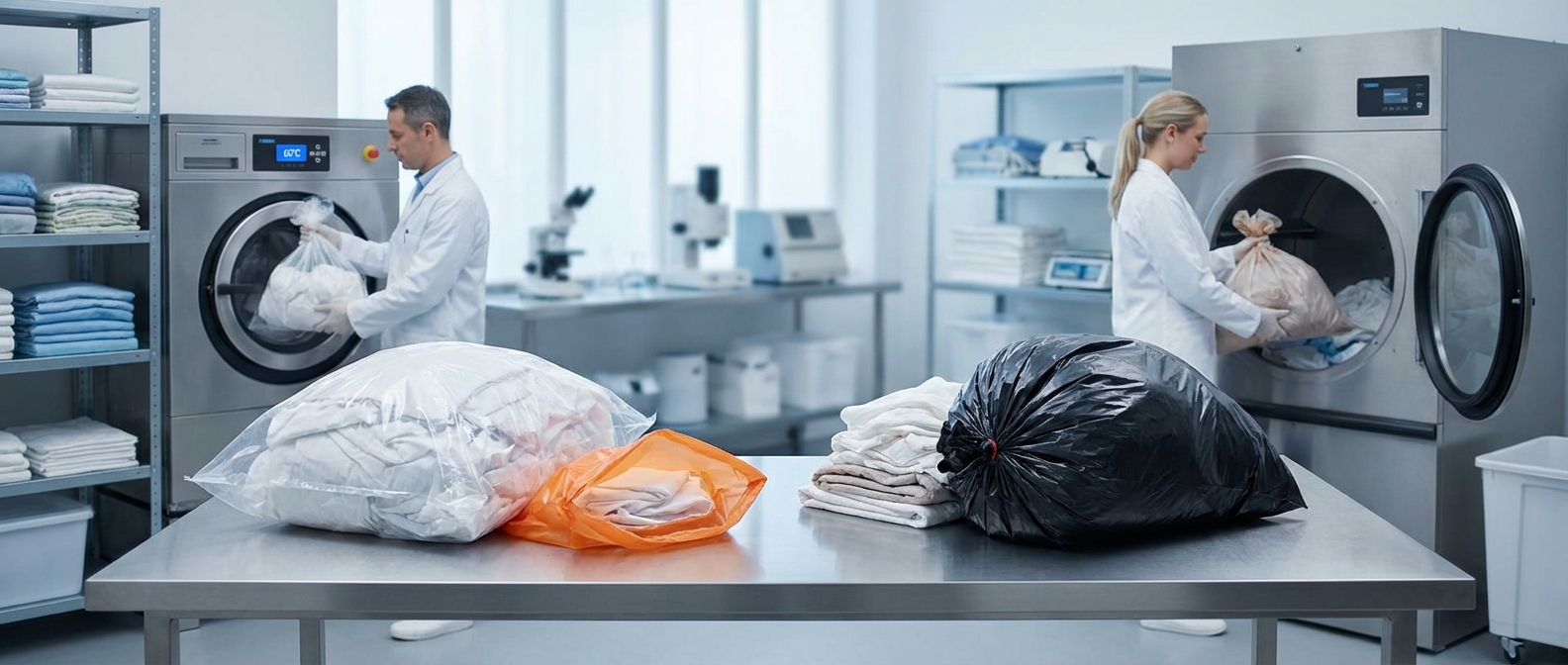
Garbage bags vs. water-soluble bags: Which method for transporting laundry?
90% of the people who call us use conventional garbage can liners to pack their contaminated laundry. On paper, it seems logical: close the bag, put it in the washing machine and you're done. But in practice, it's not quite that simple.
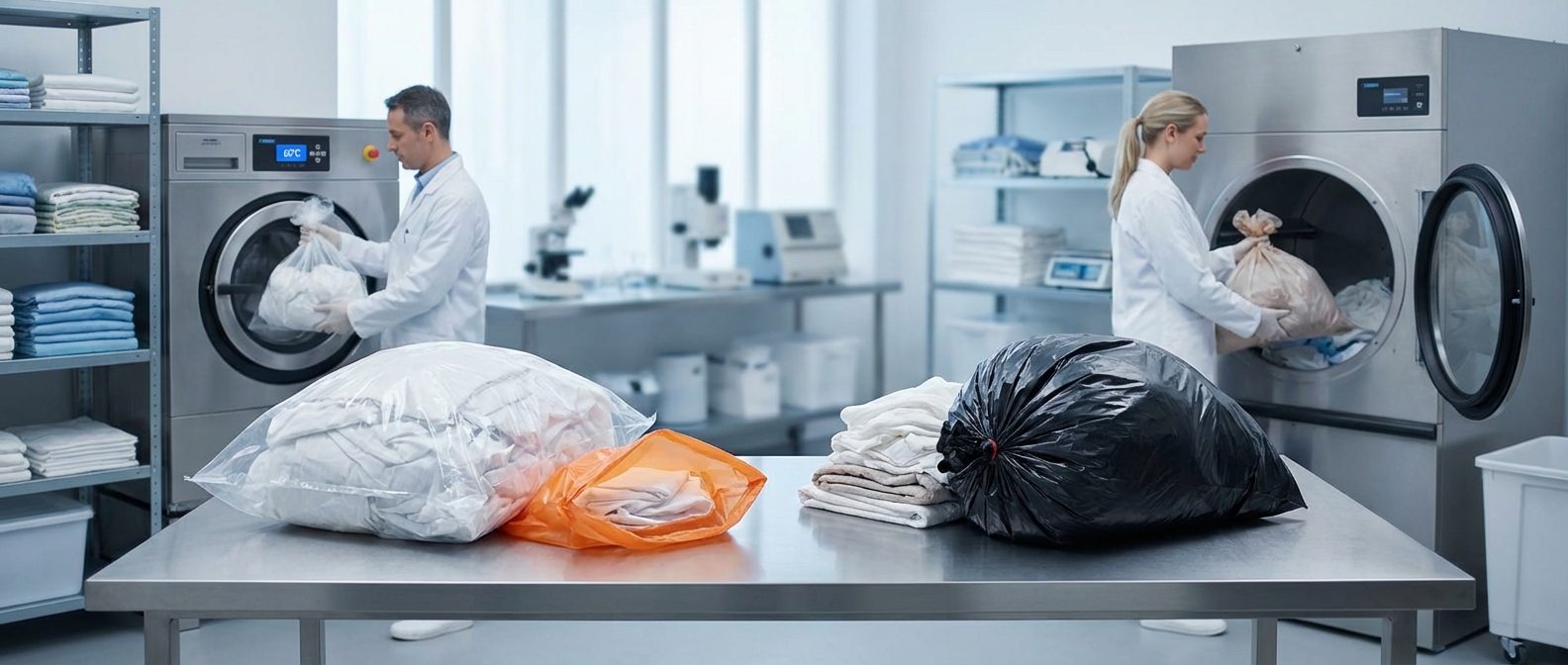
The problem with the classic garbage bag is opening it. You arrive at your washing machine, untie the knot, take out the laundry, and at that moment you release everything that was hiding in the folds: adult bedbugs, nymphs, eggs. Your laundry room is contaminated. If it's in the common areas of your Brussels apartment building, you've just offered your neighbors a free cab.
Water-soluble bags change all that. The principle is simple: you put your laundry in the bag, close it and place it directly in the machine's drum. On contact with hot water, the bag dissolves. You never have to handle contaminated laundry between the chamber and the wash cycle. Zero contact, zero risk of dispersal.
Do bed bugs stay on clothes during transport? Absolutely. They cling to the fibers, slip into the seams, and the eggs are stuck together with a natural adhesive substance. A simple transfer from garbage bag to machine can spread them everywhere. That's why transporting contaminated linen deserves as much attention as the washing itself.
In concrete terms, here's what we recommend to our customers:
-
Sort linen directly in the infested room. Never take it out in bulk.
-
Use water-soluble bags if available (pharmacies, specialized online suppliers). Expect to pay around €1-2 per bag.
-
If you only have garbage bags, double them up and seal them with tape. Not a simple knot.
-
When loading the machine, open the garbage bag. inside the drum. Turn it over gently so that the laundry falls into it. Then immediately dispose of the bag in another closed bag, heading for the outside garbage can.
The water-soluble bag remains the most reliable solution for preventing dispersion. A well-used garbage bag is an acceptable plan B, but not the ideal one. If you're managing an infestation in a Brussels apartment building with shared laundry facilities, the water-soluble bag isn't a luxury, it's a necessity. You really don't want to be the neighbor who spread the problem to the whole floor.
A final point that's often overlooked: the laundry basket itself. If you've stored linen in it that has come into contact with bedbugs, you need to treat it too. Vacuum thoroughly, then steam if the material allows. Otherwise, close the garbage bag for at least two weeks to starve out any occupants.
Washing at 60°C vs. tumble drying: Comparison of thermal disinfection cycles
The lethal temperature for an adult bedbug is 48°C maintained for 20 minutes. For eggs, it's a little higher: 55°C minimum. These figures are important because they explain why washing laundry for bedbugs at 60°C works, and why a 40°C cycle is not enough.
When you run a cycle at 60°C, the water reaches and far exceeds the lethal temperature. Adult bedbugs, nymphs and eggs are destroyed. This is the reference method for disinfecting bedbug-affected linen. There's no debate about it.
The real problem is that not everything can be washed at 60°C. Wool sweaters, delicate underwear, certain synthetic fabrics: a high-temperature cycle destroys them. And that's where the tumble dryer comes in.
A tumble-drying cycle at high temperature (at least 60°C air outlet) for at least 30 minutes kills bedbugs at all stages of development, including eggs. This is often even more effective than washing alone, because the dry heat penetrates thicker layers of fabric. A sheet folded into a ball in a washing machine can keep areas warm in the center. In a tumble dryer, hot air circulates and reaches all surfaces.
Here's our recommendation: combine the two. Wash at 60°C then 30-minute high-temperature tumble-dry cycle. A double guarantee. For fragile textiles that can't stand a hot wash, go straight to the dryer. And for textiles that can't stand either, we'll talk about it in the next section.
A question often asked: do bed bugs stay in the washing machine after a cycle? The short answer: no, not if you've used a program at 60°C or higher. Hot water and spinning eliminate them. On the other hand, if you've run a 30°C cycle with infested laundry, there's a risk that individuals will survive in the door seal or filter. A 90°C vacuum cycle after each wash of contaminated laundry is a precaution that costs nothing.
Here's a quick reference chart:
-
Sheets, covers, towels : wash at 60°C + tumble dry 30 min. No worries.
-
Cotton clothing : same protocol, check the label, but most hold up well.
-
Wool, silk, fragile synthetics : tumble dry only, minimum 30 minutes at high temperature. Do not wash at 60°C.
-
Non-washable textiles (leather, certain stuffed toys) : freezer at -18°C for 72 hours, or professional steam treatment.
Washing alone is not always enough. It's the combination of hot washing + hot drying that gives the best results for disinfecting laundry against bedbugs. If there's only one thing you need to remember from this section, it's this.
Home treatment vs. professional dry cleaning: Criteria for choice and precautions
A couple contacted us last year after bringing three bags of clothes to their usual dry cleaners, without warning of the infestation. The dry cleaner then refused to take them back, and other customers' clothes had potentially been exposed. An embarrassing situation for everyone.
Home treatment remains the simplest and safest solution for most laundry. You control the temperature, the cycle time, and above all, you don't put anyone else at risk. For 80% of textiles in a typical Brussels household, a standard washing machine and tumble dryer are enough to eliminate eggs, nymphs and adults.
Professional dry-cleaning becomes relevant in specific cases:
-
Coats, suits, evening gowns: pieces that don't go in the washing machine or tumble dryer.
-
Bulky comforters and pillows that don't fit in your drum.
-
Very delicate textiles (silk, cashmere) where you don't want to risk any damage.
If you opt for a dry cleaner, the absolute rule is to prevent. Call first. Explain the situation. Some dry cleaners in Brussels accept bedbug-infested laundry, provided it's packed in airtight bags (again, water-soluble bags are perfect for this). Others refuse outright. It's best to know before you go.
Dry-cleaning recommendations generally include high-temperature dry-cleaning or industrial steam treatment. Both are effective against bedbugs at all stages. Dry-cleaning uses solvents at temperatures that exceed the lethal threshold, and professional steam rises to 120-180°C. No bedbugs survive this.
Can bed bugs bite through clothing? Yes, if the fabric is thin and in direct contact with the skin. That's why even clothes worn during the day, and not just bed linen, must go through the disinfection protocol. We've seen infestations maintained solely by clothes stored in a wardrobe close to the bed. The bedbug, as it is sometimes called, doesn't distinguish between a sheet and a sweater: it seeks a dark shelter close to its food source.
For the treatment of bed bug-infected linen at home, here is the complete protocol we recommend:
-
Sort and pack in the infested room (water-soluble bags or lined garbage cans).
-
Transport directly to the machine, without dropping bags on the ground on the way.
-
Wash at 60°C minimum. If the fabric doesn't allow it, tumble dry directly.
-
High-temperature tumble-dry cycle, minimum 30 minutes.
-
Store clean linen in new airtight bags until the infestation has been completely treated.
-
Do not put anything back in cabinets or drawers until they have been treated (vacuum + steam or insecticide).
This last point is crucial. We regularly see people who wash their laundry perfectly and then put it away in a piece of furniture that is still infested. Back to square one. Clean linen should remain isolated, in closed bags, ideally in an uninfested room, until professional treatment has been completed.
Dry cleaning is a useful complement for special items, not a replacement for home treatment. Your washing machine and tumble dryer are your best allies for dealing with bed bugs on sheets, pillowcases, towels and everyday clothing.
Conclusion
Managing laundry during a bedbug infestation isn't complicated. It's methodical. Pack correctly, transport without dispersing, wash at the right temperature, dry long enough, store properly. Every step counts, and skipping any one of them can ruin the rest of the treatment.
If you're in Brussels and you're faced with an infestation, don't hesitate to contact us. We can guide you through the linen protocol best suited to your situation, and of course intervene to treat the infestation at source. Because washing your sheets won't be enough if the bedbugs are still in your box spring.
Frequently asked questions
How to transport contaminated linen without spreading the infestation?
Use water-soluble bags to transfer laundry from the room to the machine without direct handling. Alternatively, use lined, hermetically-sealed garbage bags, which you can gently open directly inside the machine drum.
Which wash cycle kills bedbugs and their eggs?
Washing at 60°C for at least 30 minutes is essential to destroy all stages of bedbugs (adults, nymphs and eggs). For delicate linen, tumble-drying at high temperature for 30 minutes is often more effective and less aggressive than boiling water.
Does the laundry accept bedbugs?
Some Brussels dry cleaners accept infested linen, but you must inform them in advance. Laundry must be brought in airtight bags to avoid contaminating their facilities and the clothes of other customers.
Where to store clean linen after thermal washing?
Once disinfected, never put linens back in your cupboards until they've been treated. Store them in new, airtight plastic bags, ideally in an uninfested room, until a professional has confirmed their total eradication.

 French
  English
  Dutch
Dutch