

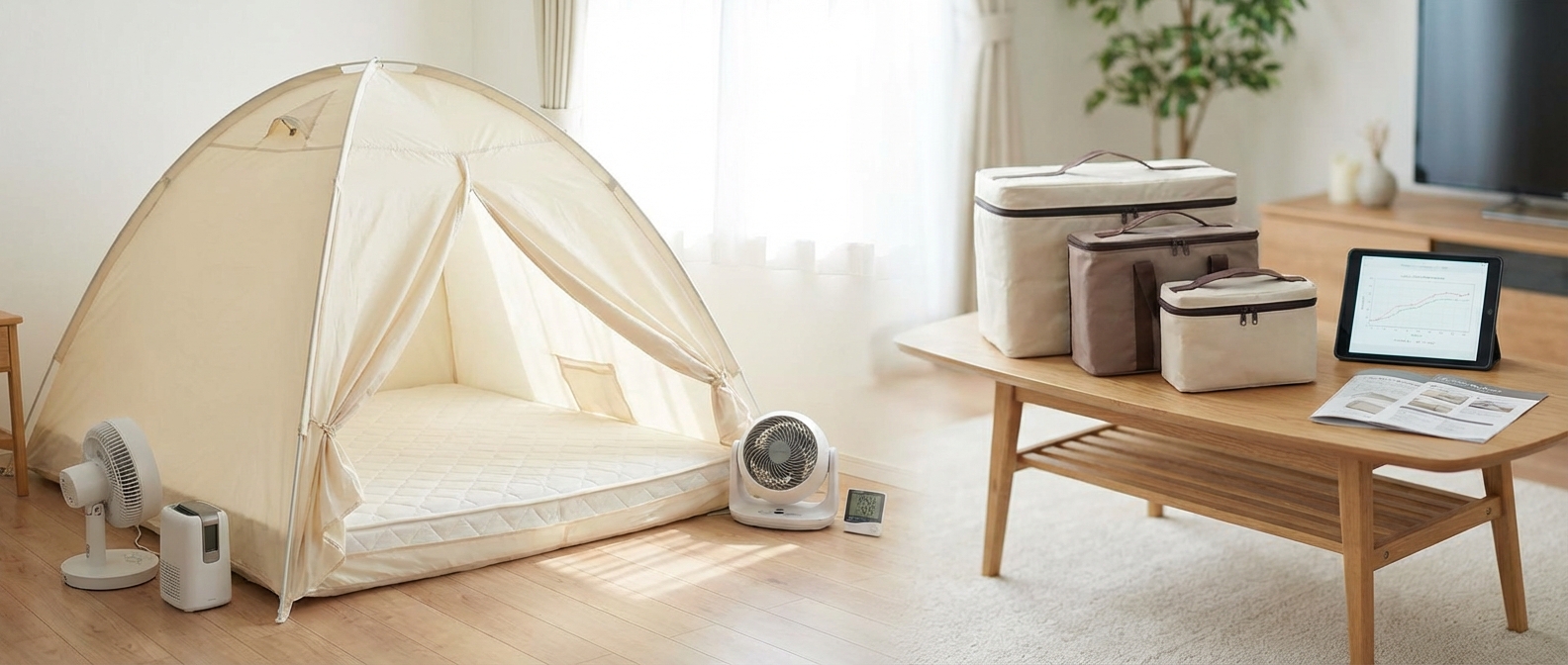
Heated tent treatment: the ultimate solution for bedbugs?
Contents
-
Prices and comparison of the best tent heaters: a worthwhile investment?
-
Where to buy or rent your heated tent in Brussels: offers and milestones
When bedbugs are discovered in the home, the first reaction is often panic. You Google dozens of chemical products, miracle sprays and grandmother's recipes using white vinegar. And then, in the middle of it all, there's the heat tent treatment. This is a pesticide-free method that targets bedbugs where they hide (in your textiles, your luggage, your small furniture) and promises natural bedbug eradication in just a few hours.
Things to remember
-
We analyze the real effectiveness of heat tents compared with chemical methods, focusing on the cost-benefit ratio between purchase, rental and professional intervention in Brussels.
-
An honest guide to natural 100% eradication
-
A profitable investment?
-
Compare options and take action.
Too good to be true? Not necessarily. Heat has long been proven to be bedbugs' number one enemy. The real question is whether investing in a heated bedbug tent is worth it compared to a conventional professional intervention, especially if you live in Brussels and want to solve the problem without turning your apartment into a chemical zone. That's exactly what we're going to look at here: prices, models, rental vs. purchase, and above all how to use it correctly so that it really works.
Prices and comparison of the best tent heaters: a worthwhile investment?
The first question on everyone's mind: how much does a heat treatment with a heat tent cost? The answer depends on what you're aiming for. If you're looking to buy, you'll need to calculate between €300 and €1,500, depending on size and brand. If we're talking rental, it's more likely to be between €50 and €150 per day in Brussels. And if you call in a professional for a complete thermal treatment of your home (heat gun, room-by-room treatment), you're looking at between €800 and €2,500, depending on the surface area.
The model that comes up most often in searches and recommendations is the Zappbug heated tent. And with good reason: the range covers several sizes. The entry-level Zappbug Heater can handle medium-sized objects (clothes, shoes, bags, books). It costs around €300 to €400. The larger Zappbug Oven 2 accepts whole suitcases and small pieces of furniture. Price: around €600 to €800. And for serious cases, the Zappbug Room goes up to €1,200 or €1,500 and can accommodate a mattress or sofa.
For an honest comparison of tent heaters, you need to look beyond the purchase price. Three criteria really count:
-
Maximum temperature reached. A tent no higher than 50°C is not enough. The core of the objects to be treated needs to rise above 55°C, and ideally to 60°C for reliable results.
-
Interior volume. A tent that's too small will force you to do ten sessions instead of three. That's a waste of time.
-
Heating reliability. Some no-name models sold on Amazon heat unevenly. Cold zones inside, and bedbugs survive quietly in a corner. Zappbug has the advantage of a fairly well-designed hot-air circulation system.
So, is it worth it? If you have a localized infestation (suitcases after a trip, clothes in a dressing room, bedding in a bedroom), yes. The cost of heat treatment with a heat tent pays for itself from the very first use, compared with a professional treatment. And you can reuse the unit as often as necessary, lend it to a neighbor or even resell it.
On the other hand, let's be clear: a heat tent is no substitute for a complete treatment of an infested apartment. It treats the objects you put inside, not the baseboards, not the electrical sockets, not the cracks in the parquet. It's a complementary tool, formidably effective within its perimeter, but it's not a magic wand. For widespread infestation, you'll need to combine the tent with other actions: thorough vacuuming, steam treatment, and sometimes, yes, a professional.
The cost of a bedbug treatment quickly climbs when you combine different methods. With a heated tent, you can reduce the cost of textiles and personal items, which are often the most stressful part of the job (you don't want to throw away your clothes or books).
Where to buy or rent your heated tent in Brussels: offers and milestones
In Brussels, finding a heated bedbug tent isn't as easy as in Paris or other major French cities. The Belgian market is smaller, and specialist retailers can be counted on the fingers of one hand. Here are your concrete options.
Buy a heated tent online. This is the most direct route. Sites specializing in pest control deliver to Belgium: you'll find Zappbug models on platforms such as Amazon.de (often cheaper than .fr for Belgium), specialized stores such as Bed Bug Supply, or European pest control equipment sites. Be sure to check delivery charges and electrical compatibility (American models require an adapter, European versions are 220V). Allow a week for delivery.
Rent a heated bedbug tent in Brussels. This is the option that makes the most sense if you only need to treat once. A number of Brussels-based pest control companies offer rental, often coupled with telephone support to guide you through the process. Rates are around €80 to €120 for 48 hours, giving you enough time to carry out several treatment cycles. At Brussels bedbugs, We can guide you towards the right rental or purchase options for your situation, and above all tell you honestly whether the tent will suffice or whether you should consider something else.
A few key steps before you get started:
-
Assess the extent of the infestation. If bedbugs are confined to one room and you want to treat bedding, clothes and a few objects, the tent is perfectly suitable. If bedbugs are everywhere in the apartment, first contact a professional for a diagnosis.
-
Choose the right size. Don't choose a model that's too small to save money. You'll multiply sessions and lose patience. The Zappbug Oven 2 is a good compromise for most domestic situations.
-
Prepare your belongings in advance. Sort out what needs to go into the tent. Put everything in sealed garbage bags to avoid spreading bedbugs to the rest of the dwelling during transport to the tent.
-
Plan your space. The tent is easy to set up (it's literally a tent with a built-in heater), but you need space. A garage, a cellar, an uncluttered living room: they all work. Avoid the outdoors in winter, as heat loss reduces efficiency.
A frequently asked question: does washing at 60 degrees kill bedbugs? Yes, a 60°C wash cycle followed by a tumble-dry at high temperature kills bedbugs and eggs. The problem is, not everything goes through the machine. Your shoes, your books, your leather handbag, a photo frame, a fragile stuffed animal: the heated tent takes over where the washing machine leaves off. That's its real added value.
At Brussels bedbugs, We regularly accompany residents who combine a heated tent with targeted professional intervention. This is often the most effective duo: the professional treats the structure of the dwelling, and you treat your personal belongings with the tent. The result: complete eradication, with no pesticides in your clothes or on your everyday items.
Practical guide: steps to successful tent heat treatment
Having a tent is great. Knowing how to use it properly is what makes the difference between «I've solved my problem» and «they came back three weeks later». Here's the detailed step-by-step procedure.
Step 1: assembly. The procedure for the Zappbug Heater (and similar models) is simple. You unfold the tent, plug in the heating element(s) and place the temperature probes. It takes ten minutes, no more. The classic mistake: plugging into an overloaded power strip. Use a dedicated wall socket, as these devices consume a lot of current.
Step 2: Loading. Place your items inside without packing them. Warm air must circulate freely between each item. If you stack your clothes like a suitcase, the center of the pile will stay warm while the edges cook. Space them out, spread them out, hang them up if possible. For shoes, open them as wide as possible. For books, spread the pages slightly apart.
Step 3: Heating up. This is the crucial moment. The lethal temperature for bedbugs is 48°C maintained for 90 minutes, or 55°C for just a few minutes. Eggs are a little more resistant, which is why it's a good idea to aim for 55-60°C at the heart of objects, and to maintain this temperature for at least an hour. Thermal shock must be total: no cold zone, no corner spared.
How do you heat the inside of the tent evenly? Good models like the Zappbug have a built-in fan that blows warm air. Place the temperature sensor at the coldest point of the tent (usually the center of the largest object). It's this measurement that counts, not the temperature of the ambient air in the tent. The air can be 70°C, while the core of a pillow is only 45°C.
Step 4: Maintenance. Once the probe indicates 55°C at the coldest point, hold for at least one hour. Two hours is even better if you have dense objects (thick books, padded shoes, small pieces of furniture). Above all, don't turn off the heating too soon. Bed bugs are tough, but they won't survive a properly conducted heat treatment. Neither will their eggs.
Step 5: Cooling and storage. Turn off the heating, open the tent and leave to cool. Your objects are now free of all traces of bedbugs, eggs and nymphs. Store them in clean bags or directly in spaces that have also been treated (vacuumed, steam-cleaned or professionally treated). If you put clean clothes back in an infested wardrobe, you're starting all over again.
Here are a few mistakes to avoid:
-
Overloading the tent. Less is more. Do two sessions rather than one full one.
-
Use the tent outdoors in cold weather. Below 10°C outside, the tent struggles to reach the necessary temperatures. The heater is working at full capacity for nothing.
-
Forget to treat ALL suspect textiles. If you treat bedding but not curtains or carpets in the same room, bedbugs will migrate quietly to what hasn't been treated.
-
The tent alone is sufficient in the event of an infestation. The tent handles the objects. Housing is another matter. Always combine heated tent treatment with a thorough cleaning of the rest of the space.
A final technical point of importance: some objects cannot withstand heat. Candles, chocolate (yes, it happens), certain plastics, sensitive electronic devices. Check before placing everything in the oven. The Zappbug rises to around 60-65°C, which is safe for the vast majority of textiles and everyday objects, but an external hard disk or a wax figurine won't appreciate it.
Conclusion
Heat tent treatment is one of the few natural bedbug eradication methods that really delivers on its promises, provided you use it correctly and don't ask it to do anything it can't do. For your textiles, your luggage, your small pieces of furniture: it's formidable. For an entire apartment, it's a complement, not a replacement.
If you're in Brussels and you're not sure whether to buy, rent or hire a professional, the easiest way is to contact us at Brussels bedbugs. We assess your situation, tell you frankly what's going to work, and guide you through to complete eradication. No sales pitch, just solutions that work.
Frequently asked questions
Is a heated tent really effective against bedbugs?
Yes, this is one of the most reliable methods, as heat kills 100% bedbugs and eggs at 55°C and above. Unlike chemicals, it offers immediate, natural results for all objects you place inside (suitcases, textiles, books).
Is it more cost-effective to buy or rent a heated tent in Brussels?
Purchase (between €300 and €800) is an excellent investment for frequent travellers or families. Renting by the day (around €100) is ideal for a one-off, cost-effective treatment if the infestation is confined to a few objects or pieces of luggage.
Can an entire apartment be treated with a heat tent?
No, the tent only treats what's inside. It's perfect for decontaminating your personal belongings, but needs to be complemented by steam cleaning or professional intervention to treat the walls, skirting boards and electrical outlets in your home.
What items can be safely stored in the tent?
Most textiles, shoes, books and small items of furniture can withstand the 60°C of the tent. On the other hand, heat-sensitive items such as candles, chocolate, certain cosmetics and fragile electronic equipment should be removed from the tent.
How long does a heat treatment cycle take?
A complete cycle generally lasts between 3 and 5 hours. This includes heating up, then maintaining the heat at the heart of the objects (at least 1 hour at 55°C) to guarantee total elimination of the eggs, which are more resistant than the adults.
Why choose a heated tent rather than a 60°C wash?
The tent is the solution for everything that doesn't fit in the washing machine. It saves your shoes, handbags, paper files or lint without damaging them, while offering far more even heat penetration than a simple wash.

 French
  English
  Dutch
Dutch